Skip To Translation Selection Skip To Top Navigation Skip To Content Skip To Footer
Emergency Alert
UDC Operating Remotely on Friday, Jan. 30

The University of the District of Columbia’s academic and administrative offices will conduct business remotely on Friday, Jan. 30. All on-campus activities, including athletic-related activities, are cancelled.

Campuses will reopen on Monday, Feb. 2.

Staff: Contact your immediate supervisor with questions or for further instruction regarding remote work expectations. 

Faculty: Reach out to your immediate supervisor and/or the dean for questions and further instruction regarding the transition to emergency remote instruction (ERI).  The Center for the Advancement of Learning (CAL) is available to support faculty with instructional continuity, including support for Blackboard, Zoom, Webex and other teaching and learning technologies. 

CAL Faculty Support Resources

calhelpdesk@udc.edu 
Virtual Office Hours
Consultation Request Form

For learning technology tools and on-demand faculty resources, please visit CAL’s website.

Students: Due to inclement weather, the university will be closed to face-to-face operations. Instruction will be moved to emergency remote, including synchronous and asynchronous methods. Certain laboratory, clinical, and other hands-on classes for which in-person instruction is a requirement may necessitate a make-up lesson, but every effort will be made to pursue virtual learning to the extent possible. Where synchronous virtual instruction is intended, published class meeting times must be observed so that students’ schedules are not disrupted.

The safety and security of our students, faculty, staff, and the broader community remain our top priority. We will continue to provide updates regarding the status of the university’s academic and administrative offices as conditions change.

Please continue to check our website and social media channels for the latest information.

If you have any safety concerns, contact OPSEM at 202-274-5050. For all immediate emergencies, call 911.

Thank you for your continued dedication to our students and to UDC’s mission. 

David A. Croom

Member of the Board of Trustees

David A. Croom
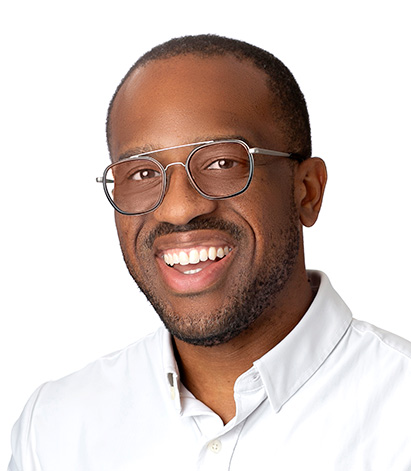
David Croom

David A. Croom is vice president and program officer at JPMorgan Chase, where he is part of the firm’s Global Philanthropy team. He works within the Jobs & Skills pillar, which focuses on expanding economic opportunity and career pathways. In this role, he manages national philanthropic investments in college access, policy, and youth pathways, including support for Historically Black Colleges and Universities.

Before joining JPMorgan Chase, Croom was director of postsecondary success for parents at Ascend at the Aspen Institute. There, he led the Postsecondary Success for Parents Initiative, which encourages higher education leaders to better support student parents and their families by engaging policymakers and promoting innovative, family-centered models.

Previously, Croom served as HBCU lead and higher education designer at Education Design Lab, where he led institutional engagement with the United Negro College Fund’s Career Pathways Initiative. He also spent over four years as a strategy officer at Lumina Foundation’s Washington, D.C., office, focusing on federal policy and postsecondary finance to increase credential attainment.

Earlier in his career, Croom was a policy analyst at ACT, concentrating on federal postsecondary education policy. During graduate school, he worked with PolicyLink on the California Boys and Men of Color Initiative and consulted for the Western Association of Schools and Colleges and California Competes. His first experience in federal policy came as a congressional aide to Rep. Maxine Waters, where he handled education policy, particularly the regulation of for-profit higher education.

Croom serves on the boards of Raise the Barr and Swipe Out Hunger. A native of South Florida, he lives in Washington, D.C. He holds a Master of Public Policy from the University of California, Berkeley’s Goldman School of Public Policy and a bachelor’s degree from the MIT Sloan School of Management, with a minor in political science.

Back to Top
Take The Next Steps, Today!