


The University of the District of Columbia has earned the No. 2 spot in PracticalNursing.org's 2027 ranking of LPN-to-RN/BSN programs in Washington, DC, recognizing its nursing education pathway and commitment to preparing health care professionals for the District.
Published in September 2026, the ranking evaluates nursing bridge programs using measures that include graduation and program completion rates, first-time nursing licensure examination results, accreditation and program format. UDC's program was also recognized as an affordable public pathway for working licensed practical nurses seeking to advance their careers.
The distinction arrives at a significant moment for nursing education at UDC. The university recently opened a Nursing Simulation Center, expanding clinical training opportunities for students pursuing a profession facing sustained workforce demand. Alongside that investment, UDC continues to offer degree pathways that allow working nurses to advance their education and professional credentials.
The developments speak to a central responsibility of the District's only public university: ensuring that residents have access to quality education in fields where their skills are needed.
A Pathway for Working Nurses
UDC Community College's LPN-to-RN bridge program operates at the Lamond-Riggs campus in Ward 5, providing licensed practical nurses with a route to registered nursing credentials through an Associate of Applied Science in Nursing.
Accredited by the Accreditation Commission for Education in Nursing (ACEN) and approved by the DC Board of Nursing, it is the District's only public LPN-to-RN bridge program.
For licensed practical nurses already working in health care, the program offers a way to build on their experience without starting their education over. Graduates who wish to pursue additional credentials can continue through UDC's RN-to-BSN completion program.
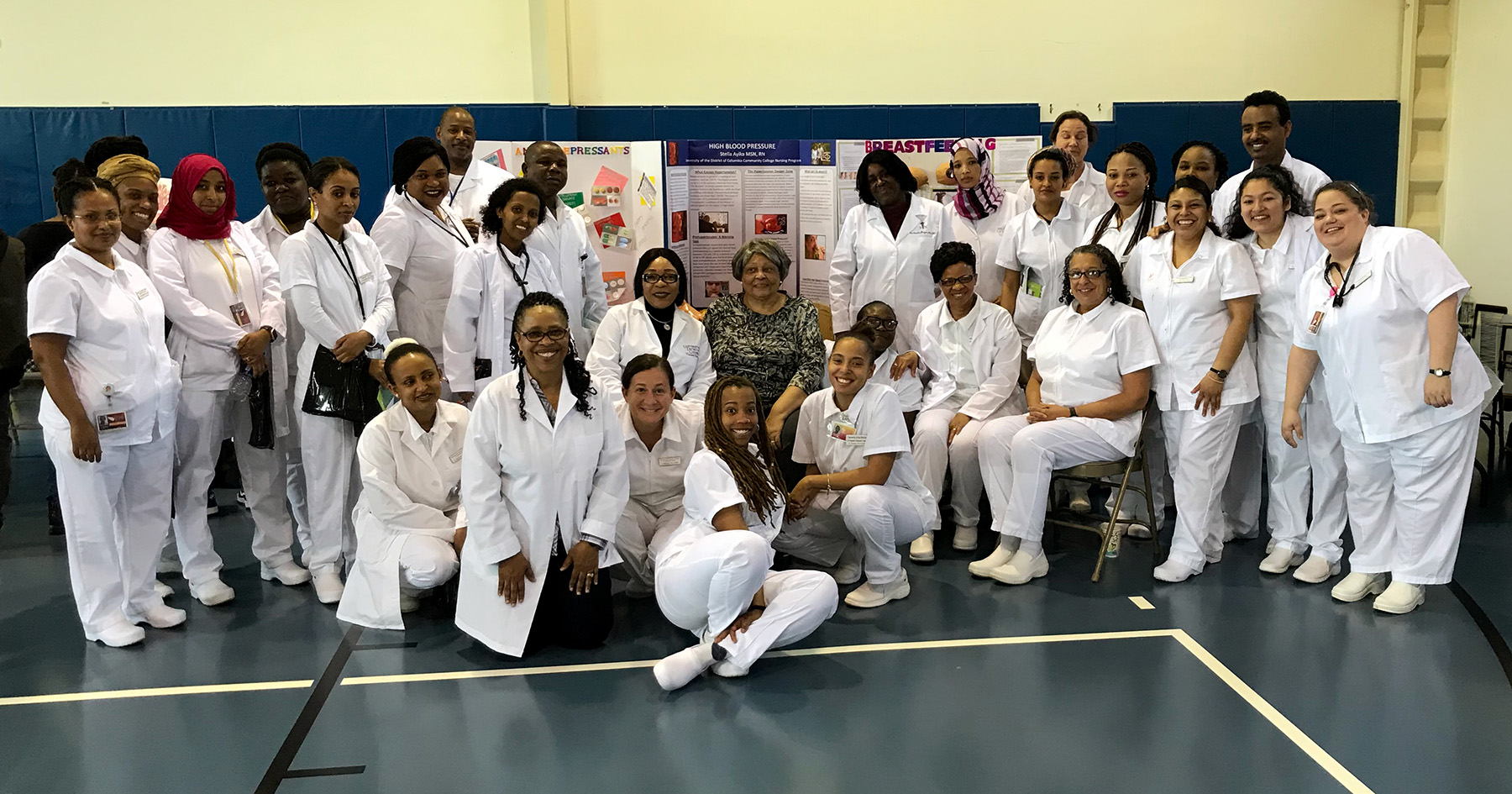
The structure is especially relevant to adults balancing employment, family responsibilities and the demands of higher education. Small cohorts allow faculty to provide individualized instruction and closer attention to students' clinical development.
UDC reports an 82.1% first-time pass rate on the National Council Licensure Examination for Registered Nurses (NCLEX-RN), an important indicator of preparation for professional licensure.
Clinical Training for a Changing Profession
In August, UDC Community College opened its new Nursing Simulation Center, giving students additional opportunities to practice clinical procedures and make patient-care decisions before entering professional settings.
The facility uses high-fidelity patient manikins, virtual reality and simulated clinical scenarios to help students develop the judgment and technical skills required in nursing practice.
"Everything in there is intentional," said UDC Community College Dean Marilyn Hamilton during the center's dedication.
The center's design reflects the increasing complexity of nursing education. Students must learn to assess patients, recognize changes in their condition and respond appropriately, often under considerable pressure. Simulation allows them to practice those decisions, receive feedback and improve their performance in a controlled setting.
Such resources have become increasingly important as nursing schools nationwide contend with faculty shortages and limited clinical training opportunities. Simulation does not replace direct patient experience, but it can strengthen the preparation students receive before entering clinical practice.
For UDC, the center expands the capacity of an established program while supporting the university's responsibility to prepare graduates for the health care environments they will encounter.
Academic Opportunity With a Public Purpose
The nursing program illustrates how UDC's academic mission intersects with the workforce needs of the District.
Chief Academic Officer April Massey has emphasized the importance of connecting the university's educational programs to its responsibilities as a public institution.
"The academic enterprise is the foundation of the university's response to its access and opportunity missions," Massey said in a previously published UDC at 175 interview.
That commitment is evident in the nursing program's progression from practical nursing to registered nursing and bachelor's-level education. Students can pursue additional qualifications at different stages of their careers, supported by faculty who understand the demands of professional preparation.
The approach also advances priorities identified in Delivering on the Promise, UDC's five-year strategic plan. The plan's emphasis on academic quality, student achievement and workforce development is particularly relevant to nursing, where educational outcomes have direct implications for the availability of qualified health care professionals.
For the District, maintaining these educational pathways means more opportunities for residents to enter and advance in a profession essential to the city's well-being.
A Legacy That Continues in the Classroom
The university's investment in nursing education rests on decades of work by faculty members whose influence extends across generations of graduates.
Few embody that history more fully than Susie Cato, who joined UDC's nursing program in 1972 and has spent more than five decades preparing students for the profession.
The new Nursing Simulation Center was dedicated in her honor, recognizing a career that has helped shape the university's nursing education tradition.
Cato's work spans profound changes in nursing practice, technology and professional expectations. Throughout those changes, the responsibility of preparing students for patient care has remained central to the program.
The results can be seen in graduates such as LaToya Francis, who passed the NCLEX-RN on her first attempt and began working in the labor and delivery unit at MedStar Washington Hospital Center in 2025.
Francis' transition into professional nursing offers a concrete example of what these educational opportunities mean for the local workforce. Her preparation at UDC helped her enter a field where skilled practitioners are needed, including at hospitals serving District residents.
An Investment in the District
The No. 2 ranking draws attention to a program whose significance extends beyond its academic standing.
As Washington's public university, UDC has a particular responsibility to prepare residents for professions that support the city's economic and social well-being. Nursing is among the clearest examples of that responsibility.
President Maurice D. Edington addressed the relationship between nursing education and community health during the dedication of the Nursing Simulation Center.
"When UDC prepares a nurse, the impact does not end with that graduate. It reaches the patients they will care for, the families they will support, the health care organizations they will strengthen and the communities they will serve," Edington said.
That impact begins with access to education and continues through professional preparation, licensure and employment. The university's nursing programs have supported that progression for generations, helping students pursue careers while contributing to the District's health care workforce.
The new ranking recognizes that work at a time when the need for qualified nurses remains substantial. For UDC, the task ahead is to sustain the quality of its programs, strengthen opportunities for clinical learning and ensure that more students are prepared to meet the demands of nursing practice.