


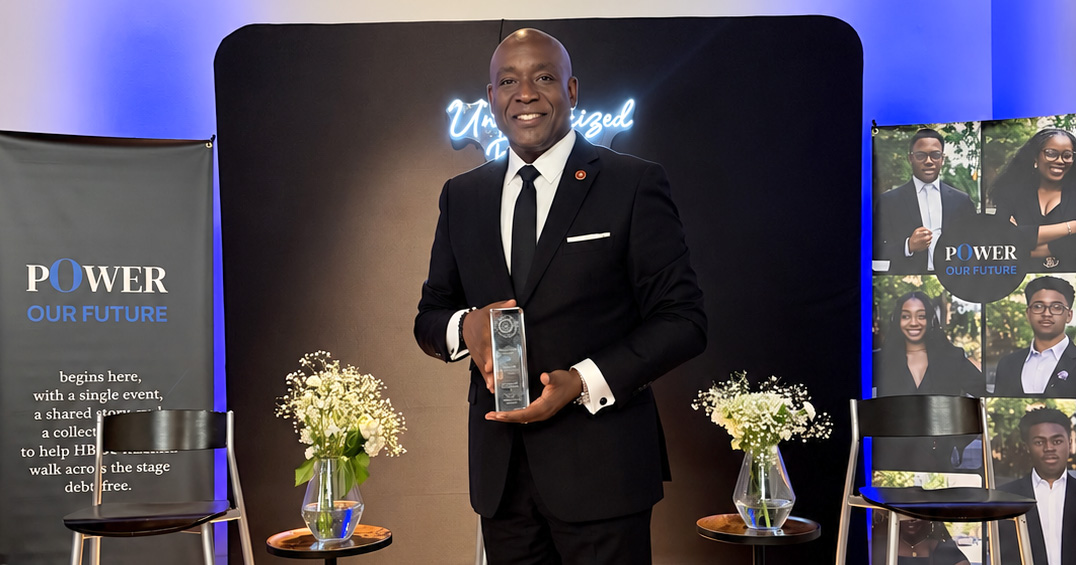
University of the District of Columbia President Maurice D. Edington received the 2026 HBCU Pillar Award on Sunday, Oct. 18, recognizing his leadership in advancing student success, expanding academic opportunities and strengthening the university's future.
Edington was nominated by HBCU students and alumni, and the organization's Council of Advisors voted unanimously to select him for the honor.
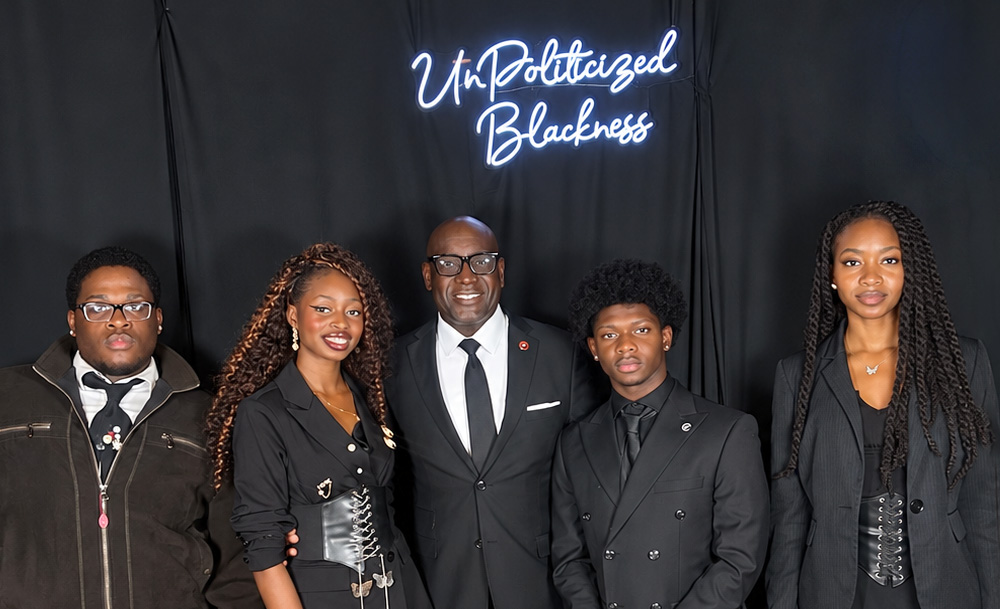
The award was presented during UnPoliticized Blackness: A Brunch at the Flag House Museum in Baltimore. UDC’s Senior Vice President and Chief Advancement Officer Richard Lucas accepted the award on Edington's behalf.
 The HBCU Pillar Award recognizes leaders whose vision and stewardship help historically Black colleges and universities remain centers of academic excellence, resilience and student achievement.
In announcing Edington's selection, organizers highlighted progress made since he became UDC's 10th president in 2023, including enrollment growth, improved student retention and the introduction of academic programs aligned with emerging workforce needs.
They also pointed to "Delivering on the Promise," the university's five-year strategic plan, which sets a course for positioning UDC as a leading national public urban institution. The plan emphasizes student success, institutional growth and academic programs in high-demand fields, including science, technology, engineering, mathematics, health care and education.
The recognition comes as UDC celebrates its 175th anniversary, marking a history of expanding educational access and preparing generations of students to contribute to the District and beyond.
As the nation's only exclusively urban land-grant HBCU and the District's only public university, UDC plays a distinctive role in connecting education, research and workforce development to the needs of the communities it serves.
Edington succeeds Virginia State University President Makola Abdullah, who received the HBCU Pillar Award in 2025.
For Edington, the honor carries a particular distinction: It began with students and alumni who saw in his leadership a commitment to the future of historically Black higher education.