


Try to name a single industry that doesn’t require a storyteller and you’ll come up empty. Historically, media programs trained students for careers in journalism or TV and film production. Today, every industry — from anthropology and urban sustainability to mortuary sciences — needs good storytellers, along with the traditional fields of journalism and TV and film production.
The University of the District of Columbia’s Digital Media Program prepares students for successful careers in all these fields. It accomplishes this by constantly evaluating the ever-changing digital media landscape and adjusting its curriculum as needed.
Flexibility is one of the key elements of UDC’s Digital Media Program. While it has core classes and four concentrations — multimedia journalism, broadcast journalism, documentary and film, and digital video production — students can mix and match courses to essentially build their own program. Virtually no two students have the same experience.
The curriculum builds incrementally, starting with and emphasizing the fundamentals before moving to advanced, hands-on projects. As the old adage goes, you have to know the rules before you can break them.
“We’ve created a curriculum that is platform-agnostic because our students go on to every imaginable area of the industry,” said Olive Vassell, professor and Digital Media Program coordinator in the Division of Arts and Humanities. “New platforms get developed all the time and the requirements for existing channels change, but knowing what makes a good story, doing your research, asking questions, knowing how to interview somebody — these are all things that will remain constant.”
Vassell also discussed the changing expectations of students who grew up online, constantly posting about their lives on social media.
“It’s a really interesting thing that we think about a lot because students today are coming in with a deep familiarity with social media, already knowing how to film and edit their stories. But, for the most part, they’ve been posting stories about themselves, and teaching structure and point of view can be particularly eye-opening,” she said.
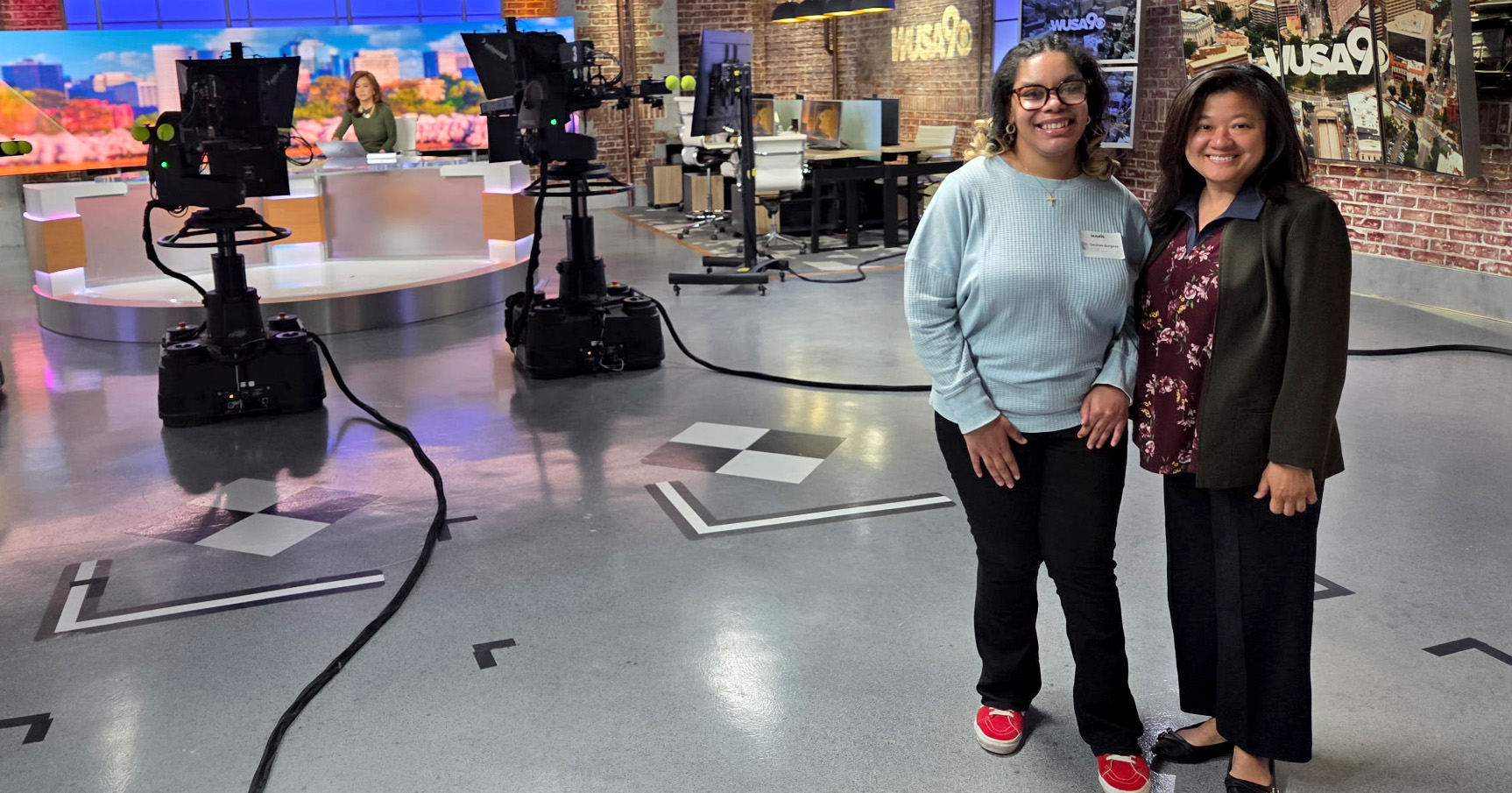
In the more advanced classes, students apply the skills they’ve learned to real-world coursework. One of the benefits of the program is the partnerships it has established across UDC and throughout Washington.
The program’s faculty pride themselves on providing students with a realistic view of what it’s like to work in the professional world. This may look like being given a manual on Friday and having to master it by Monday or being assigned a project for a real client. For instance, when Saint Elizabeths Hospital approached the program about making a five-minute documentary on the hospital’s history, one of the field production classes took on the project, which is still in development.
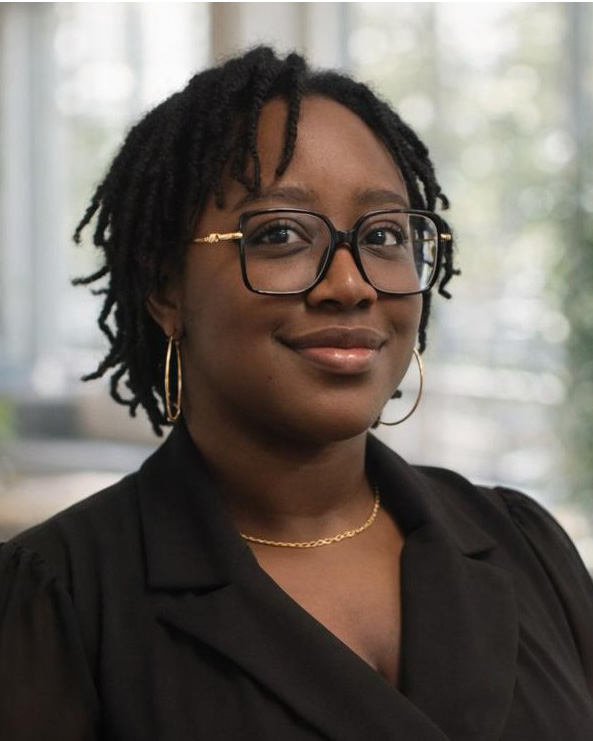
Josephine “Rowen” Dunlap, class of 2027, has known since high school that she wanted to get into documentary film production. After learning more about the skills involved, however, she was surprised by how similar it is to journalism.
“I thought, ‘Oh, I just have to write the script and pick up a camera and just go out and do the thing.’ But no! It’s research, and getting your people together and making sure you do the interviews,” Dunlap said.
That lesson was reinforced when she was awarded one of six National Geographic Content Scholarships for 2026. Penny Hollis, assistant professor of Digital Media with a focus on film, encouraged her to apply, and Dunlap received a $10,000 scholarship. The award also included six months of mentorship with a National Geographic executive, a four-day, in-person professional development experience hosted by UNCF and a weeklong immersive experience at National Geographic headquarters.
During that week, she and the other award recipients met with teams involved in every part of production, from preproduction through post-production. That included a team of archival researchers working on a documentary about the Clotilda, the last known ship to bring captives from Africa to the United States.
“We met with a team of archival researchers who had to do all of this research before filming. They had to get permission to film in Alabama [where the ship is located] and then also permission to film in Ghana because they did the whole pilgrimage all the way to Africa,” Dunlap said. “It was so cool to be there and learn from so many people and see what it’s like to work at National Geographic.”
Beyond producing real-world projects for other departments within UDC, the program offers two 15-credit certificate programs that attract students from other majors seeking practical electives and professionals looking to expand their skills. The Multimedia Journalism and Video and Film Production certificates teach students the fundamentals of storytelling, including technical skills.
“There’s really no industry that digital media doesn’t touch. Our certificate programs allow students in other disciplines to understand content and promote or share their work in relevant ways,” Vassell said. “You have to be able to market and use social media in whatever you do. For that reason, our program, in general, is a very attractive one because you can see what you can do with it instantly.”
Asha Moore-Smith, class of 2025, originally came to UDC as a music major. When unexpected health issues affected her voice, she decided she wanted to learn other skills, such as video editing. She wound up switching her major, though she is returning this fall for a second degree in music education, and was struck by the strong sense of community.
“The Digital Media Program was a beautiful experience for me,” Moore-Smith said. “I view Professor Vassell not only as a professor, but as a mentor to me. She would recommend me for programs that I didn’t think that I was qualified for, but she believed in me.”
One of those opportunities was attending the Indaba Student Press Leadership and Innovation Conference, an annual event hosted by the Center for Journalism & Democracy at Howard University. There, Moore-Smith learned about an HBCU consortium to which UDC belonged that allowed her to apply for an investigative journalism class taught at Howard University by Nikole Hannah-Jones, the Pulitzer Prize- and Emmy Award-winning creator of the 1619 Project.
Moore-Smith described the class as one of the hardest she had ever taken. Students were required to complete a training course before the class began to prepare them.
“I know that class will inform the way I approach documentaries now and in the future,” Moore-Smith said. “Just trust that when a professor recommends you for something, it’s because they see something in you and you can do it.”
The Digital Media Program shows no signs of slowing down as it finds innovative ways to support its students and prepare them for meaningful and relevant careers.
“This industry changes from month to month, never mind from year to year,” Vassell said. “It is absolutely vital that our program and curriculum evolve to best prepare students for the inevitability of change in the industry that they’re preparing to enter.”
The program, which has existed in its current form for about 14 years, is reviewing its next chapter. A planned revision would streamline the curriculum into three concentrations — journalism, production and strategic communications — and include an expanded focus on marketing. The revised curriculum is scheduled to launch in fall 2027.