


The ability to communicate can shape nearly every part of a person’s life, from learning in a classroom and building relationships to succeeding at work and maintaining independence. At UDC, students in the Master of Science in Speech-Language Pathology program are preparing to help children and adults overcome communication challenges while expanding access to care throughout the District.
UDC’s program became the first accredited program in a historically Black college or university by the Council on Academic Accreditation for Audiology and Speech-Language Pathology in 1981, and has had a longstanding role in preparing clinicians to serve diverse communities. Students learn not only the science of speech, language and swallowing disorders, but also how sociocultural and sociolinguistic factors can influence communication and care. In small classes with close faculty mentorship, students develop clinical reasoning, research skills and professional confidence before putting that knowledge into practice with patients and clients. Much of the program’s learning also happens beyond the classroom.
Through supervised clinical practicums, students work directly with children and adults with a range of communication needs. Clinical experiences take place at sites throughout Washington, DC, including hospitals, schools, rehabilitation centers, private practices and community health settings, and the variety prepares students to understand not only how to assess and treat communication disorders, but also how care changes across ages, settings and communities.
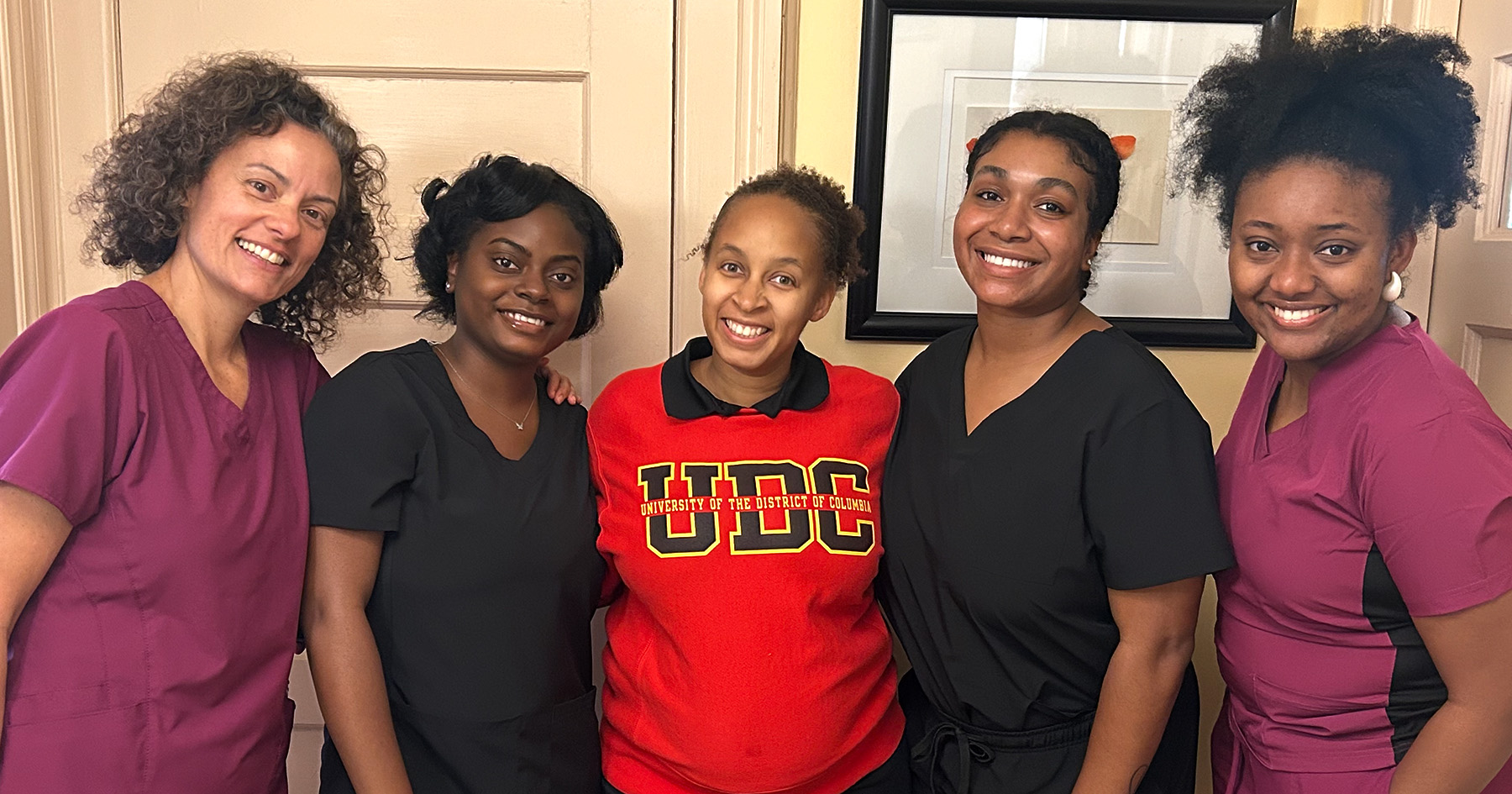
UDC’s own Speech and Hearing Clinic puts that approach into practice close to home. It serves as both a clinical training environment and a community resource, giving students an opportunity to develop clinical skills under faculty supervision and providing a full range of speech, language, cognitive and hearing screenings and evaluations and intervention services for children and adults at its on-campus facility at no cost. The program also brings its screening, awareness and education services out into the community through health fairs, senior wellness services, community forums, symposiums and more.
Similarly, other community partnerships also take students into settings where they encounter challenges that can be difficult to understand from a textbook alone.
Professor Lauren Sweet takes students to a local adult day care program each semester to lead cognitive stimulation therapy sessions with older adults experiencing dementia and cognitive decline. The experience grew from Sweet’s commitment to challenging assumptions about what speech-language pathologists can offer people living with dementia.
“Years ago, one of my clinical supervisors said, ‘Don’t worry about the patients with dementia. There’s not much we can do for them, since it’s a progressive disease.’ Those words stayed with me — not because I agree with them but because I knew they weren’t true,” Sweet wrote in a recent article featured by the American Speech-Language-Hearing Association.
That experience helped shape her focus on improving quality of life for people with dementia and their caregivers. It also convinced Sweet that future speech-language pathologists need opportunities to work directly with this population.
“Students who engage directly with people with dementia develop greater empathy, cultural sensitivity, advocacy skills, and critical thinking — skills that can’t be taught solely in the classroom,” she wrote.
At the adult day care program, students begin developing those skills early in their clinical education. They apply concepts learned at UDC while interacting with older adults in a community setting, building confidence and learning to adapt their approach to the individual in front of them. This opportunity also demonstrates how experiential learning can serve both students and the District.
“The partnership helps address a need for accessible cognitive and communication support for older adults in the community while also preparing the next generation of culturally responsive clinicians,” Sweet said. “It creates a mutually beneficial model where community members receive valuable services and education, and students gain practical experience that is difficult to replicate in a traditional classroom.”
For Sweet, that combination of professional preparation and service is central to the experience UDC is creating for future speech-language pathologists. “Through experiential learning and community partnership, we’re not just teaching therapy techniques; we’re shaping compassionate, competent clinicians who are ready to make a difference,” she said.
That philosophy extends throughout UDC’s speech-language pathology program. The program’s graduates have consistently achieved 100% examination pass rates and 100% employment rates in recent years, preparing them to enter a profession with growing demand for qualified practitioners. But the impact of that preparation is ultimately measured in people.
A screening or therapy session can help a child communicate more effectively at school. Support for an adult recovering from illness or injury can help restore independence and confidence. Working with an older adult experiencing cognitive decline can help that person remain engaged with family and community. For UDC students, these encounters are essential to becoming excellent clinicians. For the District residents they serve, they create a lasting impact.
Learn more about UDC’s Master of Science in Speech-Language Pathology program.