


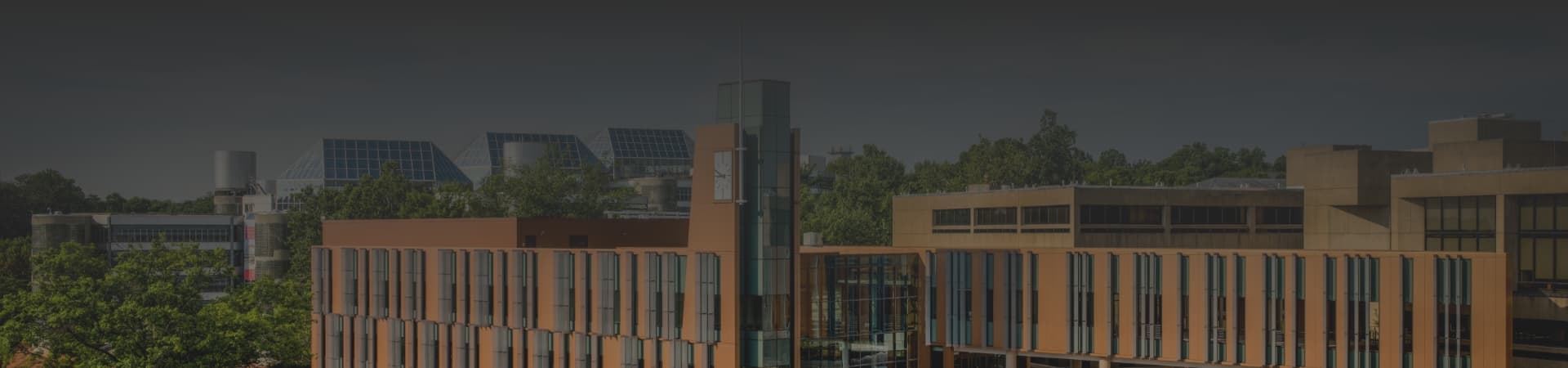

The University of the District of Columbia has established the UDC Online Division to expand access to high-quality online education and create more flexible pathways to earning a degree or credential. Longtime digital learning leader Fatma Elshobokshy will lead the new division as its executive director.
Elshobokshy, who also leads UDC’s Center for the Advancement of Learning (CAL), will oversee the development of a comprehensive online education strategy focused on access, academic quality and student success. The new division will bring together academic programs, faculty support, technology and student services to serve working adults, District residents and other students seeking greater flexibility in pursuing their education.
The division will be built from the ground up, with programs and services developed in phases as UDC establishes the infrastructure required to support a high-quality online learning experience.
We spoke with Elshobokshy about the creation of UDC Online, her vision for the new division, how her work with CAL has prepared her for this expanded role and what the initiative could mean for the future of online education at UDC.
PLJ: What does stepping into this new role mean to you personally and professionally?
FE: Stepping into this role is both an honor and a responsibility. Personally, it represents the continuation of work that I have been deeply committed to for years—creating meaningful, equitable learning opportunities for students and helping faculty succeed in an increasingly digital environment.
Professionally, this role gives me the opportunity to move from supporting individual courses and faculty through CAL to helping shape a broader institutional strategy for online education. It is an opportunity to build the infrastructure, quality standards, student support systems and partnerships necessary for UDC Online to grow in a thoughtful and sustainable way.
For me, this is not simply about expanding the number of online programs. It is about ensuring that when UDC expands online, we do it well and in a way that reflects who we are as an institution.
PLJ: How has your leadership of the Center for the Advancement of Learning prepared you for this expanded role?
FE: CAL has been much more than a faculty support unit in my experience. It has been one of the places where I have helped shape UDC’s broader vision for digital learning, innovation, and online education.
UDC has worked for years to establish a sustainable approach to online learning, and through CAL, I became deeply involved not only in supporting faculty and students but also in identifying institutional gaps, building quality standards, advancing instructional technology, strengthening course design and helping the university think more strategically about what online education should look like.
That experience gave me a clear understanding that successful online education cannot be built through individual courses or technology alone. It requires institutional alignment around policy, student services, faculty preparation, accessibility, quality assurance, technology, compliance, enrollment and retention.
Leading CAL prepared me for UDC Online because I have already been working across many of those areas and helping build the foundation. This expanded role gives me the opportunity to bring those pieces together into a more coordinated institutional strategy and move UDC from offering online learning opportunities to building a sustainable online education ecosystem.
PLJ: What is your vision for UDC Online, and what are your immediate priorities?
FE: My vision is for UDC Online to become an accessible, high-quality and student-centered gateway to UDC that supports both enrollment growth and student retention.
Online education gives us an opportunity to reach students who may not be able to attend UDC through a traditional schedule while also giving current students greater flexibility to stay enrolled when work, family, transportation or other responsibilities create barriers.
Our immediate priorities are to build the foundation needed for sustainable growth: clear policies and processes, strong course and program development, faculty preparation, accessibility, quality assurance and a coordinated online student experience. We also need to identify programs with strong student and workforce demand so that our growth is intentional and supports the university’s enrollment goals.
PLJ: How will the new UDC Online Division expand access to higher education for District residents and the broader communities UDC serves?
FE: UDC Online will expand access by creating flexible pathways for students whose work schedules, caregiving responsibilities, transportation challenges or other circumstances may make it difficult to attend classes on campus. That includes working adults, returning students, career changers and students who may have earned some college credit but have not yet completed a degree.
As the public university of the District of Columbia, UDC has a responsibility to meet students where they are and create opportunities that reflect the needs of the communities we serve. High-quality online and hybrid programs will allow us to reach more District residents and other learners while giving current students the flexibility they need to remain enrolled and continue progressing toward graduation.
Expanding access is not simply about enrolling more students. We also have to ensure they receive the academic support, technology, advising and sense of connection they need to persist, complete their credentials and translate their education into career and economic opportunities.
PLJ: What do you believe has the potential to distinguish UDC’s approach to online education from that of other universities?
FE: UDC has an opportunity to build something that is deeply connected to our mission and to the communities we serve.
We do not need to become another large online university.
Our strength is our identity as the public university of the District of Columbia and our commitment to access, affordability, workforce development and economic mobility.
If we design UDC Online around those strengths, we can create pathways that serve working adults, District residents, career changers, traditional students and learners who may have started college but were unable to finish.
The combination of affordability, flexibility, strong faculty engagement, workforce relevance and personalized support can distinguish UDC Online.
PLJ: As UDC expands its online offerings, how will you ensure that growth, accessibility and academic quality go hand in hand?
FE: Growth and quality cannot be separate conversations.
Every program we develop should begin with clear academic standards, strong course design, accessibility, faculty engagement, student support and quality assurance.
We are continuing to use established quality frameworks, including Quality Matters, while strengthening our own institutional processes for course development and review.
Accessibility also has to be embedded from the beginning rather than addressed after a course is built.
My approach is to scale carefully. I would rather build a strong foundation and grow sustainably than expand quickly without the infrastructure necessary to support students and faculty.
PLJ: What role will faculty play in building UDC Online, and how will CAL support faculty in developing and delivering high-quality online courses?
FE: Faculty are central to UDC Online.
Instructional designers and technology can support the process, but faculty bring the disciplinary expertise, teaching experience and connection with students that make the learning experience meaningful.
CAL’s role is to partner with faculty — not replace their expertise.
We can help faculty translate their knowledge into effective online learning experiences through instructional design, professional development, accessibility support, educational technology, Quality Matters review and ongoing consultation.
We also want to create a culture in which faculty feel supported in experimenting, improving their courses and adopting new approaches to teaching.
PLJ: How do you see emerging technologies, including AI and other digital tools, shaping the future of online learning at UDC?
FE: Emerging technologies give us tremendous opportunities, but we have to use them with purpose.
AI can help personalize learning, provide faster feedback, support faculty productivity, improve student services and help us better understand where students may need additional support.
At the same time, technology should never become the goal itself.
Our focus should remain on learning.
I am particularly interested in how AI can help us move beyond traditional approaches to teaching and assessment toward more authentic, experiential learning—in which students demonstrate what they know by solving problems, creating, analyzing and applying knowledge.
At UDC, emerging technology should help us expand opportunity and prepare students for a rapidly changing workforce.
PLJ: What would success look like for UDC Online one year from now and five years from now?
FE: One year from now, I would measure success not only by how many programs we have developed but also by whether we have established the infrastructure needed to support enrollment and retention.
That includes clear policies and processes, strong faculty support, a defined online student experience, quality standards, accessible courses, priority programs in development and data that allow us to understand student participation, persistence and outcomes.
Five years from now, I would like UDC Online to be a significant contributor to the university’s enrollment growth and student success. I would want to see more students entering UDC through flexible pathways, stronger retention and completion among online learners, and programs that respond to the educational and workforce needs of the District.
PLJ: For prospective students who may be considering online education at UDC, what would you want them to know about the experience and opportunities they can expect?
FE: UDC Online is about preparing students for where the workforce is going.
Students should expect rigorous, flexible learning that builds digital fluency, introduces emerging technologies, and develops the skills needed to compete in a changing workplace. Our goal is for students to graduate not only with a degree, but with the confidence and practical skills to succeed in the future of work.
Interested in learning more about UDC Online? Contact Fatma Elshobokshy for more information.