



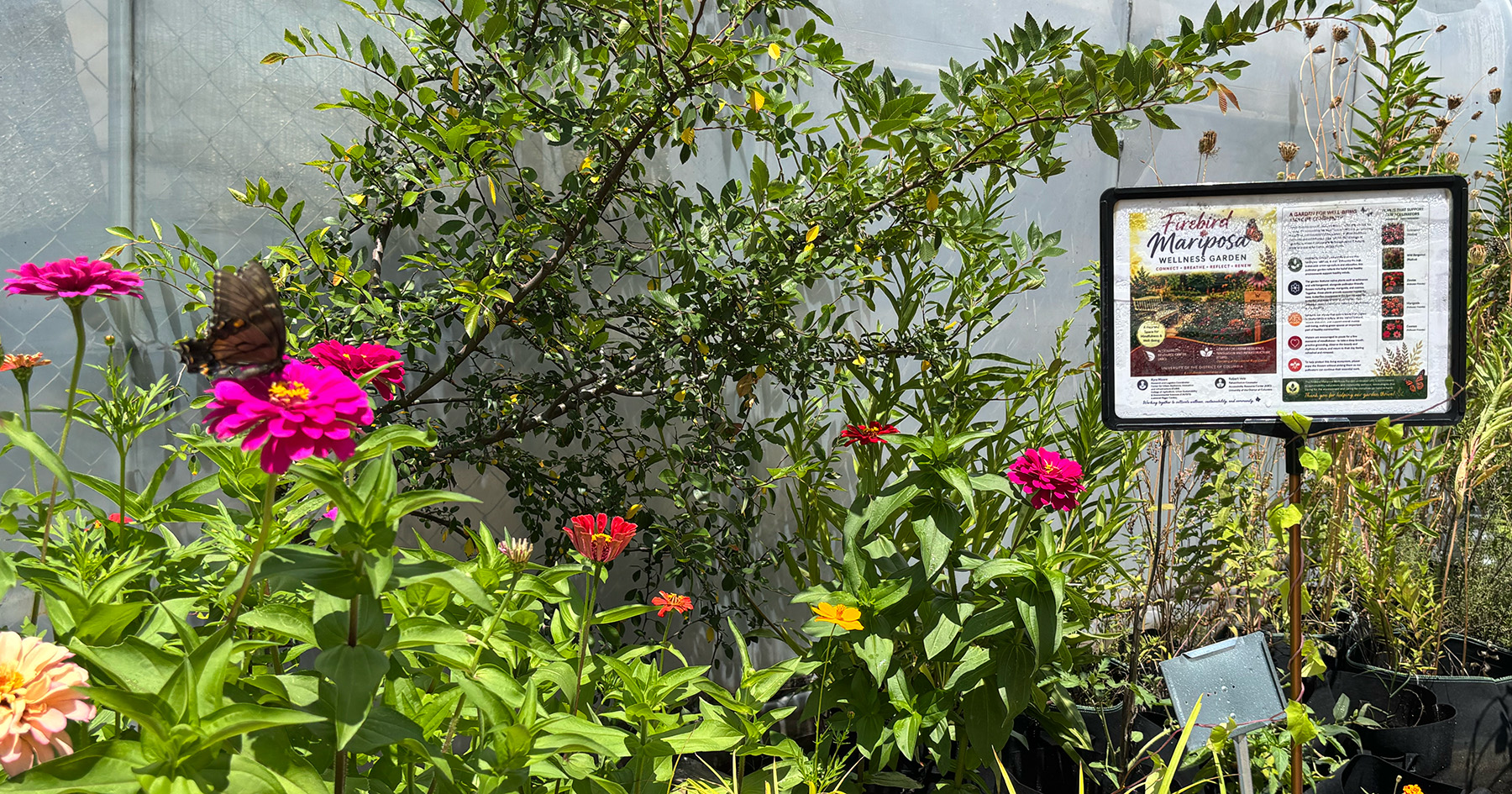
One of UDC’s newest community resources is in bloom. The Firebird Mariposa Wellness Garden at the Lamond-Riggs Campus is giving students, faculty, staff and community members a place to pause, reconnect with nature and experience the restorative benefits of a welcoming green space.
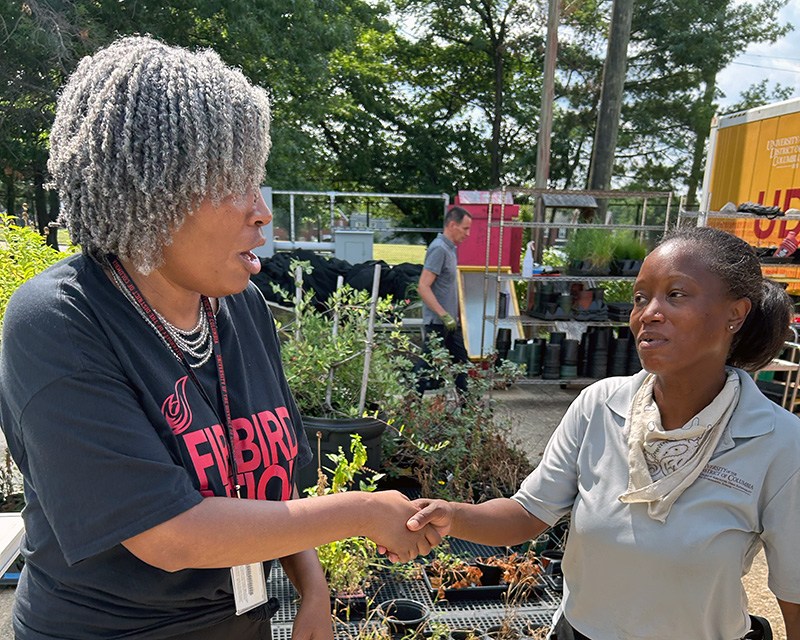
University members celebrated with an open house on July 22. Designed as both a wellness space and an outdoor learning environment, the garden brings together accessibility, sustainability and experiential education while supporting the well-being of the UDC community.
The project is a collaboration between UDC Community College’s Accessibility Resource Center (ARC) and the Center for Urban Resilience, Innovation and Infrastructure (CURII) within the College of Agriculture, Urban Sustainability and Environmental Sciences (CAUSES).
“The garden was inspired by a shared vision to create a space where wellness, sustainability, education and accessibility intersect,” said Robert Vela, Rehabilitation Counselor with the Accessibility Resource Center. “[It] was designed to be more than a collection of plants — it’s intended to be a living classroom and a restorative environment that supports the whole student and ecosystem.”
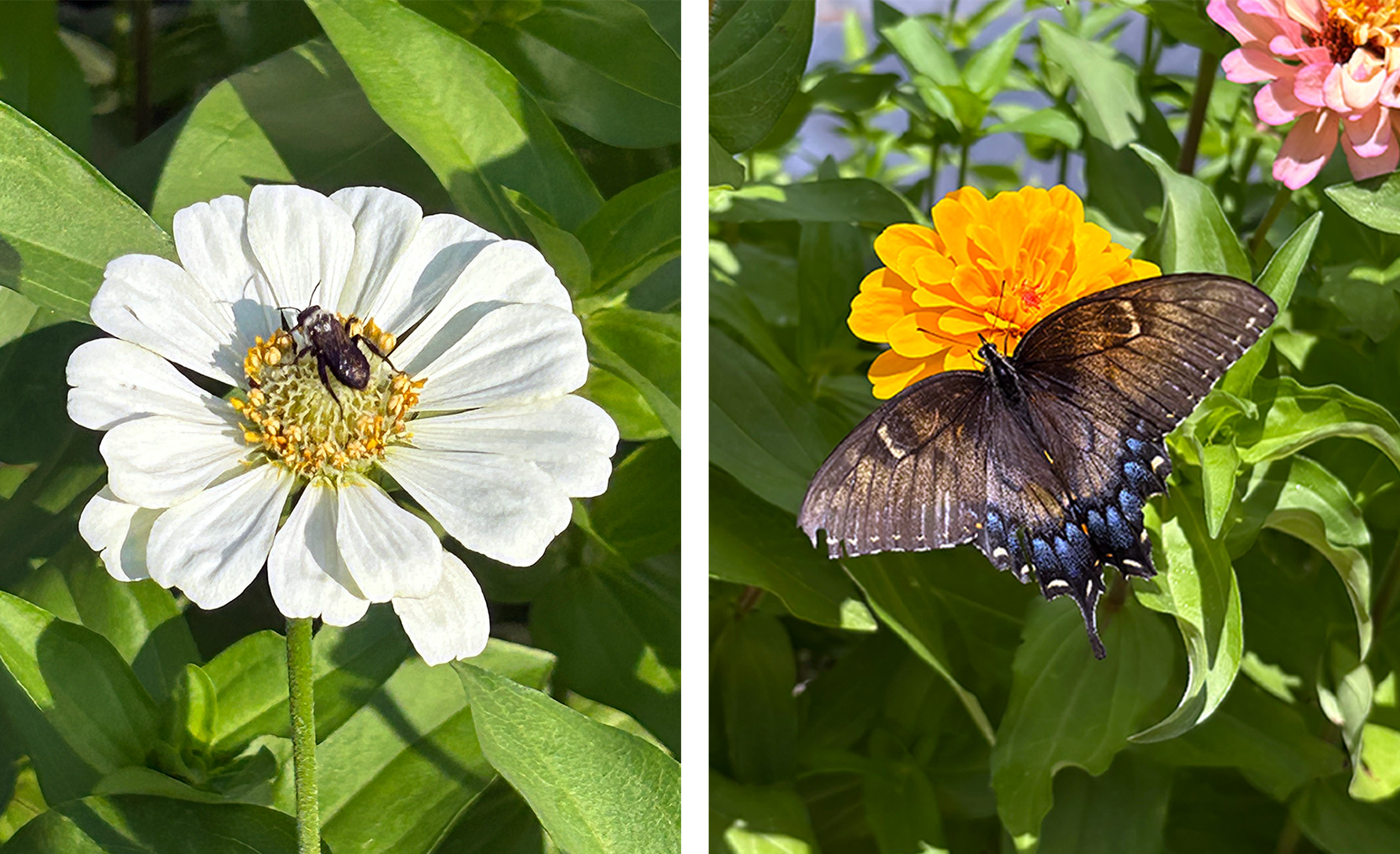
The garden is currently filled with colorful annuals grown from seed, including zinnias, cosmos and marigolds, alongside native perennials such as echinacea and wild bergamot. The plants provide habitat for butterflies, bees and other pollinators while giving visitors an opportunity to learn about native species and environmental stewardship.
Its name reflects that purpose. Mariposa is the Spanish word for butterfly, a symbol of transformation, resilience, hope and new beginnings. For UDC students, the name also serves as a reminder of the growth and perseverance involved in pursuing an education.
Kyra Moore, research and logistics coordinator for CURII, helped develop the garden through her expertise in urban agriculture and sustainability.
“The garden reflects UDC’s commitment to urban agriculture, environmental stewardship and hands-on learning,” Moore said. “It complements the outstanding work already taking place through CAUSES by creating another inviting destination that encourages students, employees and community members to engage with the campus landscape.”
Accessibility was an important part of the planning process. Pathways were designed to accommodate mobility devices, and seating areas allow visitors to rest, reflect or socialize. The open layout is intended to encourage participation by people with a range of physical abilities.
For Vela, the garden also represents an additional form of support for students, including students with disabilities.
“We wanted to create an environment where all members of the UDC community could enjoy the restorative benefits of nature in an inclusive setting and simply take a moment to breathe and reconnect with nature amid the demands of daily life,” he said.
The outdoor space is next to the greenhouses, which are currently growing lettuce, leafy greens, culinary and medicinal herbs and edible flowers, and the garden is expected to evolve with the seasons and become a setting for wellness activities, environmental education and community engagement. A community yoga group has already begun visits during the Lamond-Riggs Farmers Market, and more planned uses include guided wellness walks, gardening workshops, pollinator education and stress-reduction activities during midterms and finals.
The Firebird Mariposa Wellness Garden is still in its early stages, but visitors are already describing it as peaceful and welcoming. As the plants mature and programming expands, the space is intended to become a lasting symbol of how accessibility, environmental stewardship and student well-being can flourish together at UDC.