


More than you might think, according to Professor Pawan Tyagi, director of the Center for Nanotechnology Research and Education (CNRE) at the University of the District of Columbia (UDC).
Carotene, the molecule that gives carrots their bright orange color, is showing surprising promise in Tyagi's research into technologies that could underpin the next generation of computing, making it more powerful, energy efficient and sustainable.
While advances in computing have largely meant making silicon-based electronics faster and more powerful over the years, Tyagi is investigating a different path, exploring a variety of materials that could one day complement or even replace conventional silicon-based devices in some computing applications.
Recognized in 2025 by the World's Top 2% Scientists Network for his groundbreaking research, Tyagi is helping position UDC’s School of Engineering and Applied Sciences (SEAS) at the forefront of an emerging field known as molecular spintronics, where engineers, physicists and chemists are working together to answer one of computing's biggest questions: What comes after silicon?
Opening the Door to New Computing Technologies
Scientists have theorized for decades that individual molecules could someday serve as building blocks of electronic devices. The challenge wasn't imagining the possibility. It was figuring out how to connect molecules, some as small as one nanometer, into computing systems that could be manufactured practically and at scale.
Tyagi believes his team has solved that problem.
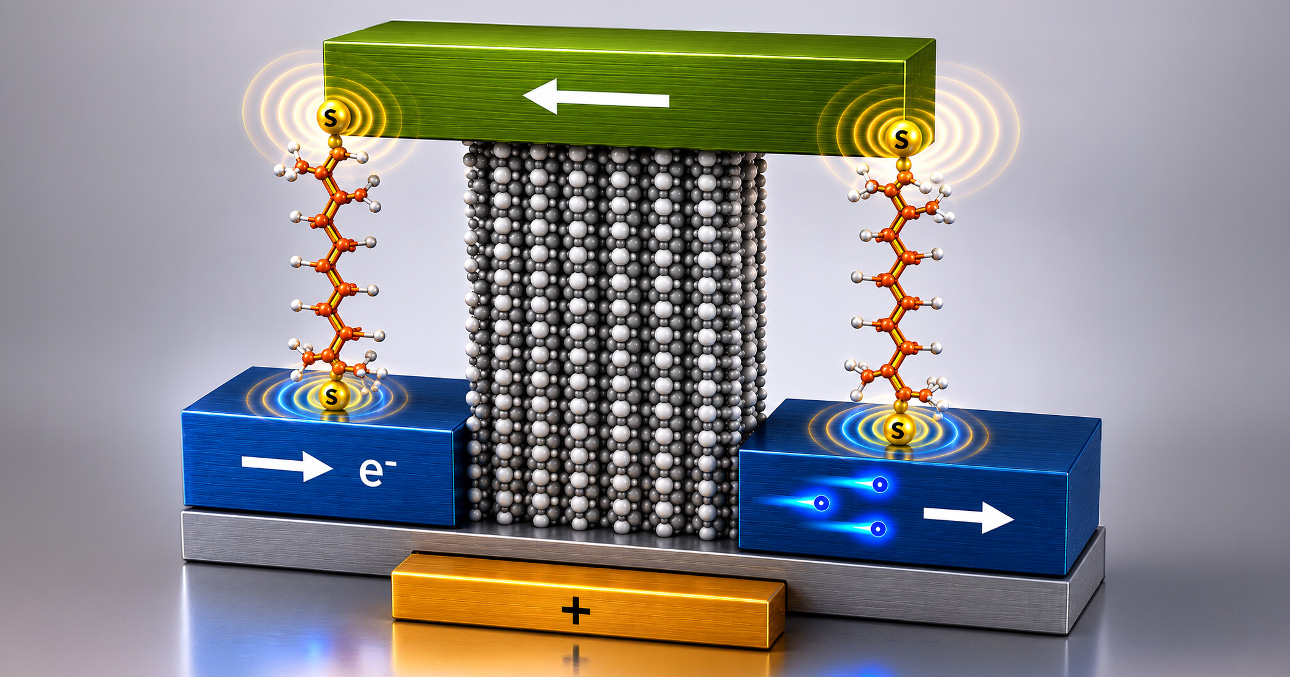
His patented Trenched Bottom Electrode Based Molecular Spintronics Device introduces a new way to integrate molecules into electronic hardware using conventional manufacturing techniques. Rather than limiting researchers to silicon alone, the approach creates a pathway for an almost limitless variety of molecules, each with unique electrical and magnetic properties.
The innovation recently resulted in two U.S. patents and was presented in June at the prestigious Electronic Materials Conference.
"One molecule could be DNA," Tyagi said. "It could be chlorophyll. It could be carotene. We're excited to be working alongside our colleagues in the chemistry department, many of whom already have tremendous expertise in designing and synthesizing molecules. Now, as engineers, we're developing new ways to use them."
Carotene is among the many molecules Tyagi and his collaborators are exploring as they investigate new approaches to future computing technologies, illustrating how materials found in nature could help shape the next generation of electronics.
The breakthrough dramatically expands the range of molecules researchers can explore for future computing technologies. Instead of relying on a single material, scientists can look at an array of naturally occurring and engineered molecules, selecting those with properties best suited for specific applications.
Building More Sustainable Computing
Tyagi's research isn't simply about making computers faster. It's also about making them dramatically more energy efficient.
Today's electronics rely almost exclusively on silicon and the movement of electrical charge. Molecular spintronics employs another property of electrons, their magnetic "spin," creating new opportunities for technologies that require far less energy while offering greater computing power.
"As AI continues to grow, the demand for computing power and novel computing schemes will continue to grow," Tyagi said. "Future technologies using our approach could consume a fraction of the energy they consume today. The manufacturing process could also require less energy and have fewer processing steps by expanding on fabrication techniques already well-established by the semiconductor industry."
Those advances remain years away, but they illustrate why molecular spintronics has become one of the emerging frontiers of computing research.
Discovery Starts With Students
For Tyagi, however, important breakthroughs aren't just happening in the laboratory; they're happening in the lives of his students.
Since joining UDC in 2010 and founding the university's nanotechnology laboratory two years later, Tyagi has secured nearly $20 million in federal funding to support research, equipment and student training. Undergraduate, master's, doctoral and postdoctoral researchers work alongside Tyagi and other faculty, contributing to projects with implications for quantum computing and advanced manufacturing.
Each year, as many as 40 students from the Quantum Information Science program at UDC Community College train in Tyagi's lab, giving associate degree students early experience in nanotechnology research and opportunities to continue their educational journey.
Students trained in Tyagi's lab have gone on to careers with organizations including the U.S. Navy, Department of Defense, NASA and the Kansas City National Security Campus, while others have continued into doctoral research.
One of them is Pius Kika Suh, who earned bachelor's, master's and doctoral degrees at UDC before becoming an NSF-funded postdoctoral research fellow at CNRE.
"What I enjoyed most was seeing how the concepts we learned in class translated into real research in the laboratory," said Suh. "Being involved in research allowed me to ask questions, test ideas and develop solutions through hands-on experience. Those experiences shaped me into the researcher I am today."
Suh said the opportunity to work alongside Tyagi and other faculty shaped him into the researcher he is today and ultimately helped him earn the postdoctoral fellowship.
“I want students to know UDC is a place of innovation and discovery," Tyagi said. "When you come here, you're not just a learner. You're a discoverer."
That approach is reflected in the opportunities students receive to publish their work.
"I've had students graduate with as many as five peer-reviewed publications to their name," he said. "Their credentials speak for themselves. They leave UDC with the research experience, publications and practical skills that prepare them for whatever comes next. It makes me very proud, both of the students as well as the work we do to support them."
For Tyagi, that is also what makes research at a public HBCU so special.
"Part of UDC's mission is to serve marginalized communities," he said. "We're a smaller institution, but we're making meaningful contributions in highly specialized areas of engineering. We're preparing students for future careers with practical, real-world research experience. Our students can stand alongside students from any university."
As quantum computing continues to move from theory toward reality, Tyagi believes the next breakthroughs will come from researchers willing to challenge long-held assumptions.
Sometimes that means looking beyond traditional approaches.
And sometimes it begins with a carrot.