


Summer Session: Beyond the Classroom is a summer series highlighting the many ways University of the District of Columbia faculty continue advancing the university's mission beyond the academic year. Through research, professional development, community engagement and preparation for the year ahead, faculty remain actively connected to their disciplines, students and communities.
For the second installment of the series, we spoke with Hossain Azam, associate professor of environmental engineering, about mentoring the next generation of environmental engineers, advancing research on emerging contaminants and preparing innovative learning experiences for UDC students.
PLJ: What does summer typically look like for you once the academic year ends?
HA: My typical summer varies from year to year. It is mainly focused on advising student research, preparing for upcoming fall and spring courses, and supporting summer programming for high school students.
PLJ: Are there any projects, research, professional development opportunities or community initiatives you are focusing on this summer?
HA: This summer, I am focusing on several ongoing funded projects supported by organizations including the USDA, DC Water and the DC Water Resources Research Institute. I will be advising two PhD students and four master's students as they make significant progress in their research.
I am also working to complete several journal manuscripts currently in development. In addition, I will be redesigning at least one future course to incorporate an entrepreneurial mindset into the curriculum. Having recently completed several seed grants, I plan to build on those findings by developing competitive federal grant proposals for submission during the upcoming academic year. I will also be preparing grant proposals for fall 2026.
PLJ: What trends or changes in your field are you paying the closest attention to right now?
HA: I am particularly interested in environmental engineering research within the framework of the water-energy-food-climate nexus. The relationships among renewable energy, agriculture and food systems, water resources, wastewater and waste management are of great interest.
I am also closely following developments related to PFAS (per- and polyfluoroalkyl substances), which have emerged as a major environmental concern. PFAS research has become an important focus within the field, and it is an area I continue to explore in my own work.
PLJ: How does the work you do during the summer help shape the student experience at UDC during the academic year?
HA: Summer is a time for preparation and reflection. The effort devoted to course development helps ensure that students receive current and relevant information in the classroom.
The research progress made by students under my supervision during the summer also helps advance their thesis work and provides strong direction for continued success during the academic year.
PLJ: What is one thing you are especially looking forward to in the upcoming academic year?
HA: Students are the key to our success. I am looking forward to engaging students through redesigned courses and securing new grants that support innovative research opportunities.
PLJ: What is something people might be surprised to learn about how you spend your summers?
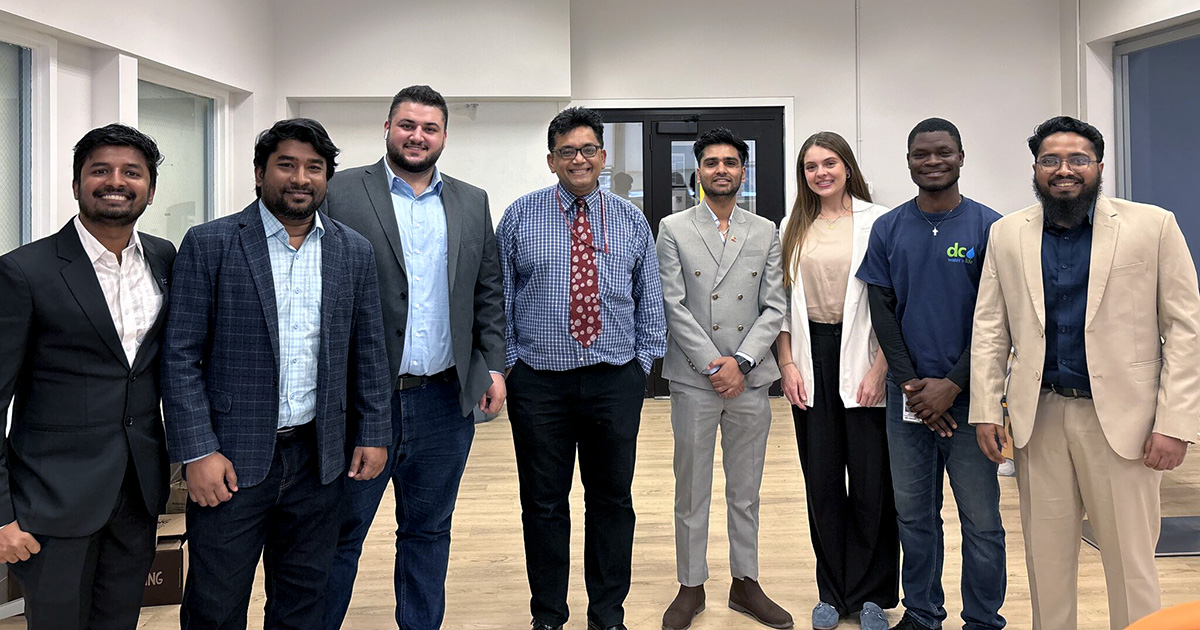
HA: Apart from ongoing research, course preparation and proposal development, I am planning to spend time with my newborn baby girl, Tahireen, over the summer. I am also planning to have a get-together with my current and former students who live in the area at the end of the summer.