


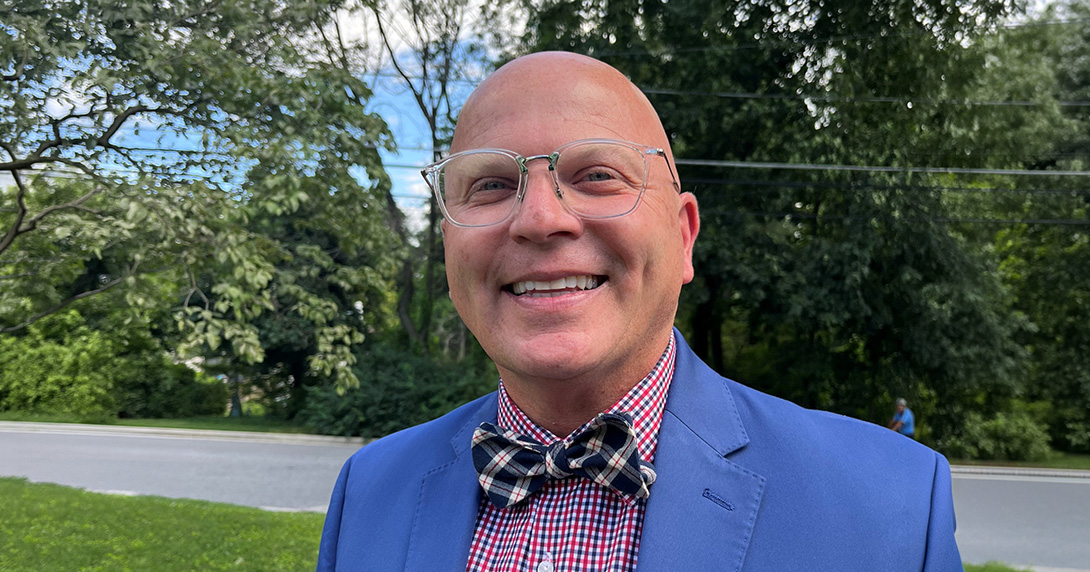
For 175 years, the University of the District of Columbia has been shaped not only by its students and alumni, but also by the faculty and staff whose dedication has sustained its mission of access, opportunity and public service. In this UDC 175 Conversation, Vice President of Human Resources Shawn Celio reflects on the university's legacy of investing in people, building an inclusive workplace and preparing the institution to meet the evolving needs of the District and the communities it serves.
PLJ: As UDC marks its 175th anniversary, what does this milestone represent from the perspective of human resources and organizational leadership?
SC: UDC’s 175th anniversary is more than a historical celebration — it is a powerful reminder of the enduring role of public higher education in shaping human capital, workforce development and community resilience.
From an HR and organizational leadership perspective, this milestone represents:
- A Legacy of Access and Equity
- Workforce Engine and Talent Pipeline
- Strategic Alignment and Organizational Growth
- Community Impact and Employer Branding
- Resilience and Adaptability
UDC’s 175th anniversary symbolizes a long-standing commitment to human capital development, equitable access and community-driven growth. For HR and organizational leadership, it is both a reflection on past achievements and a catalyst for future strategies that connect education, workforce readiness and economic mobility.
PLJ: Universities are often defined by their students and academic programs, but they are also shaped by the faculty and staff who support those missions every day. How have UDC employees contributed to the institution's legacy of access and opportunity?
SC: UDC’s enduring commitment to access and opportunity is not solely the work of faculty and students — it is deeply rooted in the daily contributions of its dedicated employees. These employees have helped shape the institution’s mission by ensuring that educational resources, services, and programs are available to all, regardless of background or circumstance.
For example:
- Expanding Access Through Student Services
- Supporting Inclusive Academic Programs
- Community Engagement and Outreach
- Operational Infrastructure for Equity
- Cultural and Institutional Memory
UDC’s legacy of access and opportunity is sustained by a network of employees who through direct student support, inclusive program design, community engagement, and operational excellence — ensure that the institution’s mission and vision remain both aspirational and achievable for all.
PLJ: What makes UDC a unique place to work, particularly given its role as the District's only public university and the nation's only exclusively urban land-grant university?
SC: UDC stands out as a workplace because it is the only public university in Washington, DC, and the nation’s only exclusively urban land-grant university, combining a long history with a mission-driven, community-focused approach.
Founded in 1851 and consolidated in 1977, UDC carries the legacy of being a historically Black land-grant institution, making it the only public HBCU in the District. This heritage shapes its culture of inclusion, service and commitment to equity, while its land-grant mission ensures it integrates research, teaching and outreach to address local needs.
UDC’s mission is to serve the District’s diverse population, from DC public high school graduates to students from around the world.
Employees work in a setting where the university’s programs directly impact local workforce development, economic mobility and public service.
UDC provides comprehensive academic offerings. With five colleges, a law school and multiple entry points (associate, bachelor’s, master’s, professional, doctoral and workforce training), UDC offers a broad range of academic and professional opportunities.
This variety means employees can engage across disciplines, from urban sustainability to engineering, law and public administration.
There is strong community integration. UDC operates multiple campuses and facilities, including research farms, aviation training sites and community colleges, allowing staff to work in diverse environments and collaborate with local stakeholders.
There is a laser-like strategic focus on excellence and innovation. The university’s strategic plan emphasizes service excellence, marketing, and partnerships to attract and retain top talent. Employees benefit from a culture that values innovation, integrity and collaboration, with opportunities to contribute to research, policy and community projects.
UDC offers the most affordable tuition in the District and produces graduates who often secure higher-than-average-paying jobs. This economic impact reinforces the value of working at UDC, as employees contribute to both academic success and local economic growth.
PLJ: In what ways is the Office of Human Resources helping to build a workplace culture that attracts, develops and retains talented employees committed to student success?
SC: The Office of Human Resources at the University of the District of Columbia (UDC) plays a strategic role in shaping a workplace culture that attracts, develops and retains talented employees committed to student success.
UDC’s HR aligns recruitment with the university’s mission, vision, and core values, ensuring candidates not only have the right skills but also share a commitment to student success and diversity. This includes promoting UDC’s brand, mission and inclusive environment to stand out in a competitive higher education job market.
Drawing on best practices from higher education and healthcare HR transformation and workplace culture research, UDC’s HR function supports this mission through several key initiatives such as:
- Attracting Talent Through Culture and Values
- Fostering Inclusion and Diversity
- Enhancing Employee Engagement and Wellbeing
- Building a Culture of Feedback and Continuous Improvement
- Supporting Professional Development and Retention
- Aligning Culture with Strategic Goals
UDC’s HR ensures that workplace culture supports the university’s strategic objectives — such as improving student outcomes, expanding diversity and fostering innovation — by embedding these goals into recruitment, retention and engagement practices.
PLJ: Looking ahead, what workforce trends or employee needs is UDC preparing for as higher education continues to evolve?
SC: Aligning programs with labor market demand
In its 2024–2029 strategic plan, UDC aims to become the District’s workforce and economic mobility engine by aligning degree and certificate programs with the most in-demand, high-paying jobs in the region. This means UDC is likely to expand or redesign programs in areas with strong projected growth, such as technology, healthcare and skilled trades.
Bridging the skills gap
UDC is expected to strengthen work-based learning opportunities, interdisciplinary degree design and agile thinking across disciplines, ensuring graduates can adapt to rapid technological and industry changes.
Flexible, career-focused education
Higher education trends show a move toward flexible learning options — online, accelerated, and modular programs — so students can balance work and study. UDC is likely to expand these pathways to meet the needs of working adults and those seeking career advancement without leaving the workforce.
Employer–institution partnerships
UDC is expected to deepen collaborations with local and national industries to co-design curricula, provide real-world training and ensure graduates are job-ready. This includes advisory boards, industry-led projects and faculty engagement with current workplace practices.
PLJ: What gives you confidence that UDC is well-positioned for its next chapter?
SC: UDC’s confidence in its next phase comes from a clear, ambitious, and well-supported strategic plan — Delivering on the Promise — that aligns with both its institutional mission and the broader goals of Washington, DC.
Strong, forward-looking vision
The university’s 2024–2029 five-year plan sets bold, measurable goals: doubling degrees awarded annually, improving retention and graduation rates, expanding dual enrollment and increasing research funding. These targets are designed to transform UDC into a world-class flagship university and a national model for urban student success.
President Maurice D. Edington has a track record of elevating institutions nationally. His leadership, combined with a rebranding and marketing push, aims to modernize UDC’s image and attract top students, faculty and donors.
In addition, the strategic plan has broad stakeholder support. The plan was launched with endorsement from the mayor, Board of Trustees and university leadership, and it engages students, faculty and the community. This unity of purpose strengthens its credibility and execution potential.
UDC’s confidence stems from a cohesive, ambitious, and community-focused strategy backed by leadership experience, measurable goals and tangible impact — positioning it to lead in both the District and nationally.
PLJ: In one sentence, what do you hope people say about UDC when the university celebrates its 200th anniversary?
SC: UDC is a high-quality, accessible, and transformative institution — a national model for urban student success, a vital engine for the District’s workforce and economy and a source of pride for Washington, DC. Let’s Go Firebirds.
This conversation is part of the UDC 175 series, highlighting the people, milestones and ideas that have shaped the University of the District of Columbia's first 175 years — and the vision guiding its future. Read more UDC 175 Conversations.