


Nearly a century after Jane Ellen McAllister began transforming teacher education as a leader at UDC predecessor institution Miner Teachers College, a documentary celebrating her extraordinary impact is inspiring a new generation of educators.
On July 17, the Smithsonian’s National Museum of African American History and Culture hosted a screening and discussion of “My Mind to Me a Kingdom Is: The Legacy of Dr. Jane Ellen McAllister,” a film by independent filmmaker and photographer David Rae Morris highlighting McAllister’s work as a pioneering education scholar. The event was presented in conjunction with the museum’s exhibition “At the Vanguard: Making and Saving History at HBCUs,” and the documentary includes primary materials from the UDC Archives that help tell a key chapter in McAllister’s remarkable story.
McAllister served as a professor and chair of the Education Department at Miner Teachers College for more than two decades, and during her tenure helped strengthen teacher preparation programs, advanced curriculum development and mentored generations of educators who would go on to serve Black communities across the United States. Her work reflected her deep belief that education could transform lives and strengthen communities—a philosophy that continues to shape UDC’s mission today.
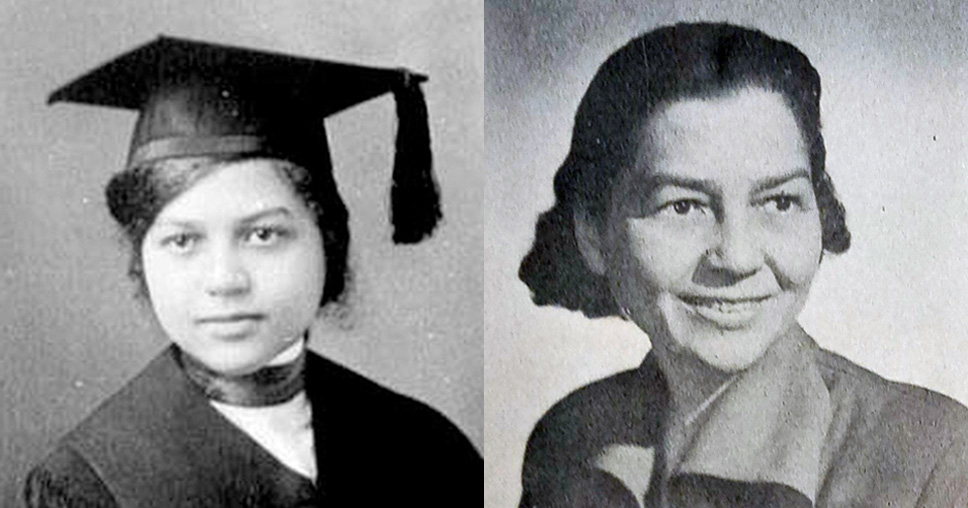
As UDC professor and archivist Christopher Anglim explains, Miner was where her national reputation “blossomed, grew, and thrived… Photographs, footage and board and faculty materials from the collection document her contributions here and are artifacts that memorialize the life of one who fully and selflessly devoted her life to the education of her students, who, in turn, empowered succeeding generations to excel and prosper in their lives. … [The UDC] archives continue to pay quiet and powerful homage to a master teacher whose legacy continues to inspire young people to answer the eternally noble call to teach and lift.”
McAllister was born in Vicksburg, Mississippi in 1899 to parents who were both college-educated and learned the power of education very early. Inspired by her teacher mother, she was already helping teach younger students to read by the time she was in second grade.
After earning her bachelor’s degree from Talladega College and her master’s degree in the University of Michigan’s inaugural master’s program in education, McAllister enrolled at Teachers College, Columbia University, where in 1929 she became the first African American woman in the United States to earn a Ph.D. in education. Her groundbreaking dissertation, “The Training of Negro Teachers in Louisiana,” helped establish a scholarly foundation for the study of African American teacher education. She supported herself along the way as a tutor, substitute teacher, house cleaner, waitress and dog walker, doing whatever was necessary to pursue her historic goal.
Just one year later McAllister joined Miner Teachers College. It was a pivotal moment in the institution’s history, and as Miner transitioned from a normal school into a four-year teachers college, McAllister played a central role in strengthening its academic programs and curriculum.
Over the next twenty years McAllister established herself as a nationally recognized authority on teacher education. She published extensively, spoke at conferences across the country and collaborated with philanthropic organizations and government agencies to improve educational opportunities for Black students and teachers during an era when access to quality education remained deeply unequal. She was also a key early supporter of the push for Miner and Wilson Teachers College to merge into the integrated DC Teachers College.
Her influence extended far beyond Washington. While serving on the Miner faculty, she also helped strengthen teacher education programs at the institutions that are now Grambling State University and Jackson State University, expanding her impact across the South while continuing to mentor future educators in the District.
After leaving Miner in 1951 to return to her family home in Mississippi, she spent the rest of her lengthy career at Jackson State, where a dormitory and lecture series are now named in her honor. The African American Cultural Heritage Action Fund at the National Trust for Historic Preservation recently awarded a grant for preservation of McAllister’s Vicksburg home, one more acknowledgment of her legacy.
But her living legacy remains her students. She was known for her high standards and insistence on excellence. As she says in the documentary, “I live through the achievement of my students. I would like to summarize all of that and see how many have become physicians, how many have contributed something to the world. If I could do that, that would be the way that I measure myself, because I had some small part in it, and their achievements formed part of my life.”
The film also captures the lasting impression McAllister left on them. Ivory Phillips, who later became dean of the College of Education and Human Development at Jackson State, shared one of her teaching philosophies: “One of the things she advised us was that if you really want to be an effective teacher, you need to first read yourself full, and then you can write or teach yourself empty.”
Now, nearly 100 years after McAllister arrived at Miner Teachers College, UDC is continuing to produce inspiring educators and mentors while preserving the stories of pioneers whose work expanded educational opportunity for generations.
The Smithsonian screening served as both a celebration of McAllister’s remarkable career and a reminder that the history of teacher education at the nation’s HBCUs and their place in the history of American educational opportunity cannot be told without recognizing the contributions of Miner Teachers College and UDC.