



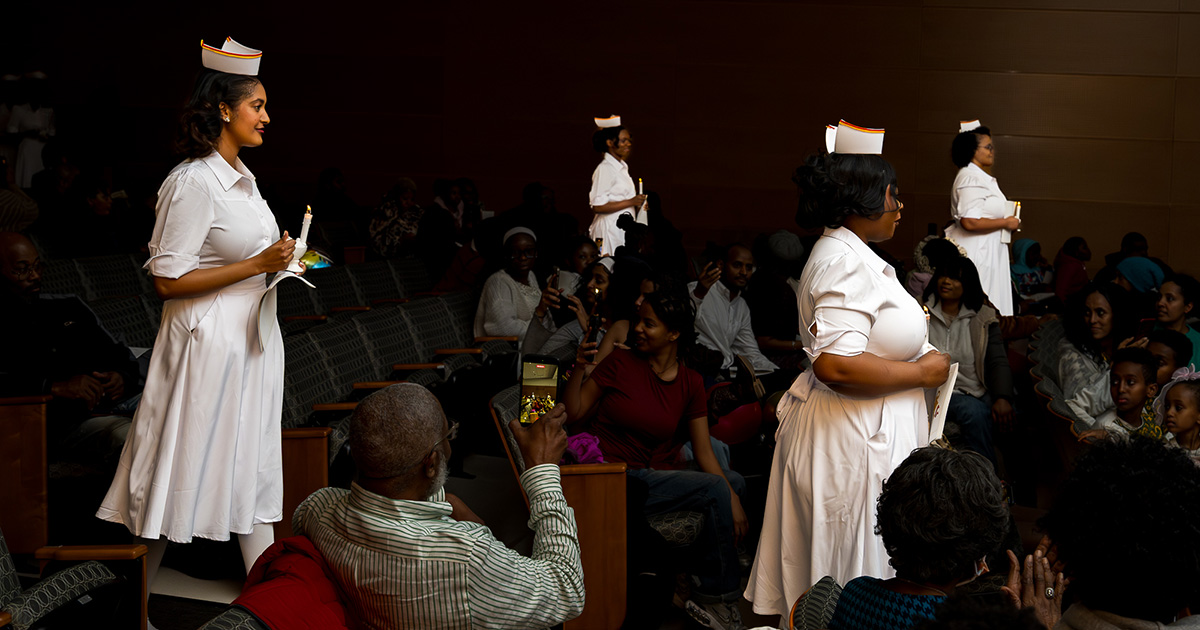
The Nursing Education Program of the University of the District of Columbia marked another year of academic excellence Wednesday night with its annual pinning ceremony. Held at the Lamond-Riggs campus, the ceremony recognized 29 graduates from the Bachelor of Science in Nursing, Associate of Applied Science in Nursing (AASN) and Practical Nursing programs.
In a time-honored tradition dating back to the 19th century, when Florence Nightingale presented pins to the nurses she trained, the graduates slowly walked down the aisles of an auditorium filled with their family, friends, mentors and loved ones. Dressed in white nurses’ uniforms and holding replica oil lamps, each was then called to the stage to receive their pin from Professor Susie Cato, who has been the steady presence and guiding force behind UDC’s nursing program for over 50 years. And while many chose to have a family member or partner affix their pin to their lapel, each made sure to give Cato a warm hug as a tribute to her role in their success. Finally, after all the nurses had received their pins and paused for a photo, they were led in the Florence Nightingale Pledge, the traditional oath all new nurses take at the start of their professional careers.
The keynote address, delivered by Freda Osei, emphasized the importance of what each new graduate was about to do. The pin they just received, she noted, was more than simply a connection to tradition. It is “a badge of honor and a pledge of service,” a commitment not to a career but to a calling. She charged them with going “beyond what the classroom teaches” so that they might “be the nurse you want to have taking care of you.” In this endeavor, they would need both the knowledge they had acquired at UDC and their inborn “resilience that occasioned your answer to the call.”
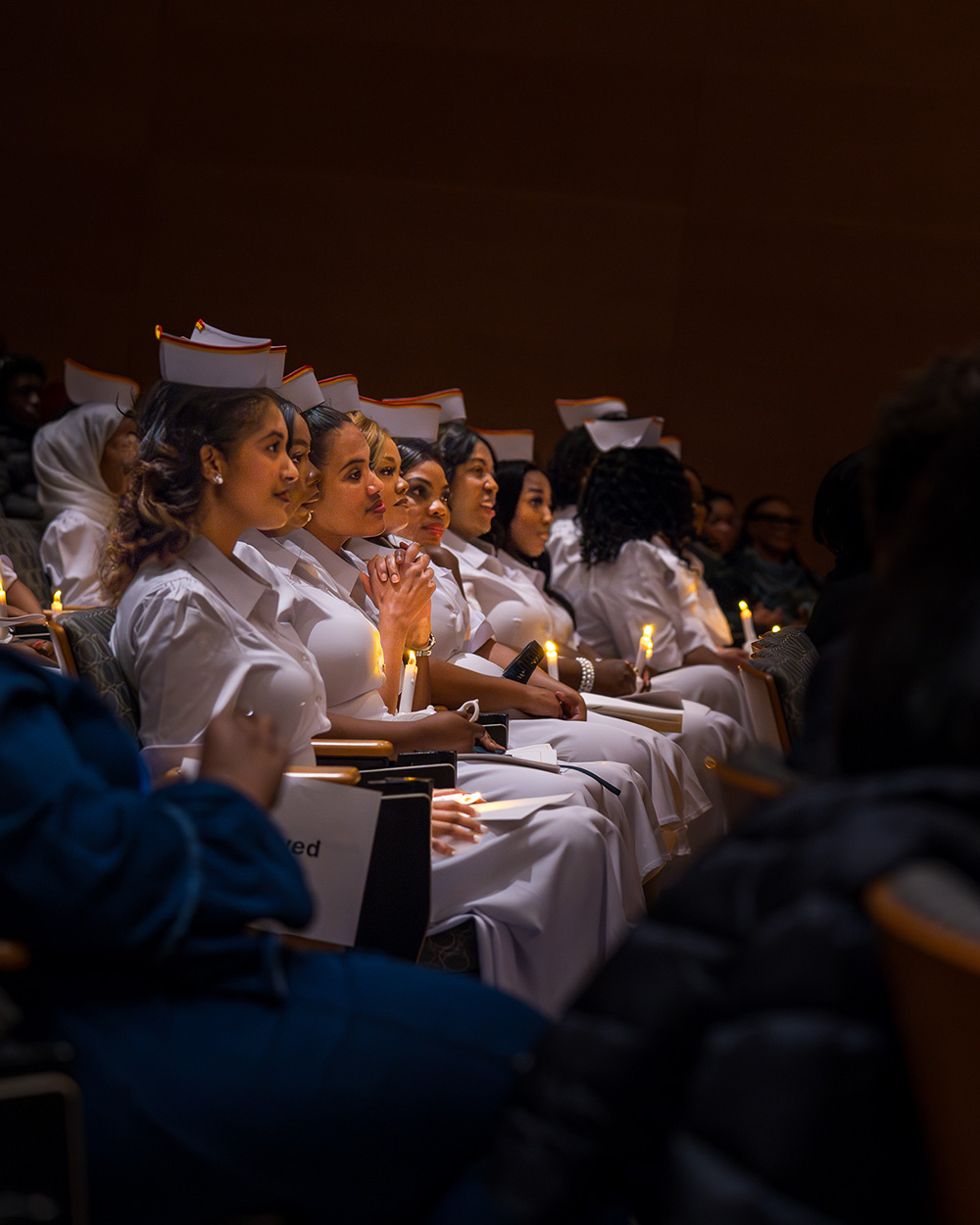 Aquanetta Taylor, an AASN graduate who gave the class’s tribute address, similarly emphasized both learning and character. She knows the value of perseverance: when she gave birth four years ago, she swore she would become a nurse, and she has now accepted a position as a labor and delivery nurse at the same hospital where she made that vow. And she won’t be just any nurse, but “a Firebird nurse… walk into any hospital in DC, mention UDC and watch their faces light up.”
In her closing remarks, Associate Chief Academic Officer for Student Affairs Myesha Carter made a particular note of the importance of UDC’s legacy to the graduates. “Being educated at this HBCU in its 175th year is a mandate,” she said, because “health care is a tool of social justice.” And in pursuit of this justice, she told the new nurses, “you carry the excellence of this university with you.”
Their task will not be easy, and the expert care of these new Firebird nurses will be in great demand. According to the American Association of Colleges of Nursing, the United States continues to face a significant shortage of registered nurses, and this deficit is only expected to widen in coming years. In responding to this shortfall, UDC’s nursing program is just one of the many ways the university is rising to meet the District’s employment needs.