


As a professor with ten years of experience at UDC Community College in the criminology degree program, I have found that hands-on learning opportunities are precisely what our students are seeking. In fall 2024, my criminal procedure course allowed students to apply the knowledge they gained about the criminal process in real-world scenarios, providing them with a deeper understanding of how theory translates into practice. In my issues in criminal law course, I designed assignments that not only helped students identify complex criminal law issues but also provided them with an opportunity to express their unique talents through poetry, bridging the gap between legal concepts and creative expression.
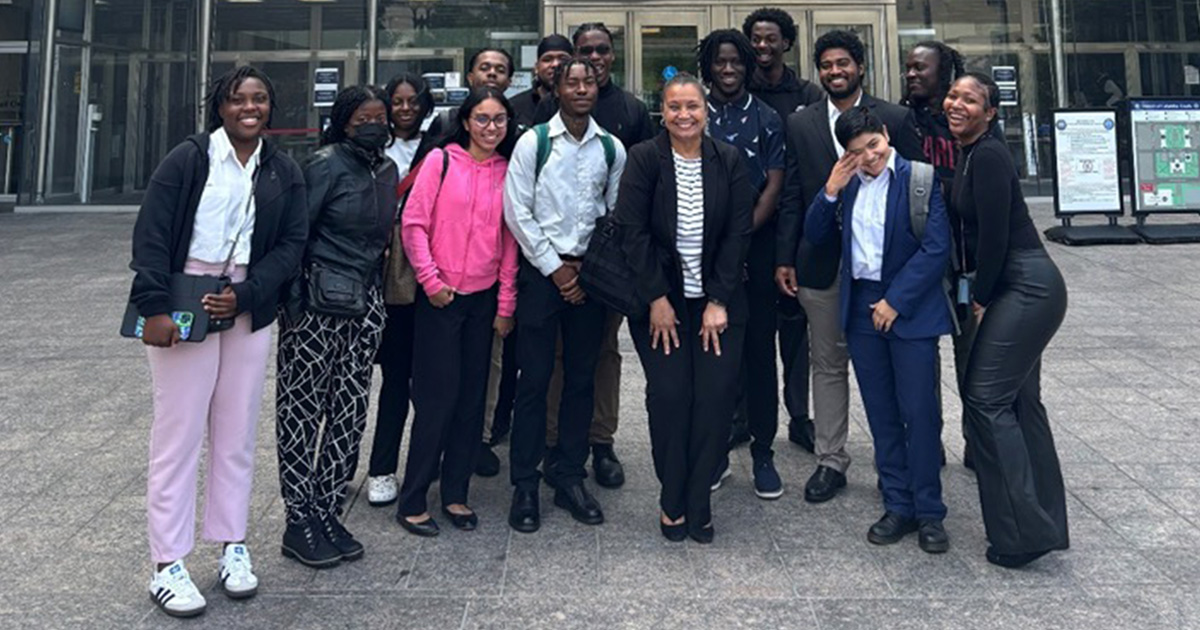
The criminal procedure visit to D.C. Superior Court highlighted the value of experiential learning in understanding the complexities of the criminal justice system. Students attended actual criminal trials and engaged with various parties, including law enforcement personnel, judicial staff and even a defendant, to gain firsthand insights into how the legal process operates in practice. In fact, one of the defense attorneys announced that he was a graduate of UDC Law School.
Observing key elements, such as pretrial orders, discovery, evidence admission, and witness testimony, allowed students to see the application of legal principles and rules in real-world scenarios. This immersive approach not only reinforced the theoretical knowledge acquired in the classroom but also emphasized the uniqueness of each case, illustrating the dynamic nature of the legal system.
The opportunity to witness the jury selection process and engage with the courtroom environment deepened students’ understanding of the rights of the accused and the importance of fairness and consistency in legal proceedings. Such experiences are invaluable for future legal professionals, as they cultivate a nuanced understanding of the complexities involved in the criminal justice system and the critical role of empathy and ethics in the field. Student reflections suggest that this course equipped them with both practical insights and a solid foundation for their future studies or career in law.
The issues in the criminal law project assignment highlighted the creative value of artistry and literary expression as they relate to problems in our criminal justice system. Students used their creativity to draft a poem inspired by a medium of their choice, such as a song, movie, play, newspaper article or television show. The poem addressed a criminal law issue. In this course, we learned about the criminal justice system, focusing on the injustices and challenges it faces. Students wrote on matters of sexual assault, police brutality, wrongful convictions, racial disparity, mental illness, mass incarceration, excessive punishments, and ethics in the courts. The submissions were enlightening and fascinating.
Reflecting on the fall 2024 semester, it's clear that our approach at UDC Community College has made a significant impact on our criminology students. By stepping out of the classroom and into real-world legal settings and by expressing their insights through creative projects, our students have gained a richer, more nuanced understanding of the criminal justice system. These experiences have not only deepened their knowledge but also nurtured their empathy and critical thinking skills. We're proud to see our students grow into thoughtful, well-prepared individuals ready to tackle the challenges of their future careers. Their journey this semester is a testament to the power of innovative teaching and the importance of connecting theory with practice.
Rhonda Heard Dickens is an assistant professor at UDC Community College. Dickens is a practicing attorney. She received her Bachelor of Arts in Political Science and Juris Doctorate from Howard University.