Skip To Translation Selection Skip To Top Navigation Skip To Content Skip To Footer
Campus Alert
Update on Facilities Emergency as of Friday, Oct. 23

Following Tuesday morning's electrical incident originating in the mechanical room of Building 42, power disruptions impacted Buildings 32, 38, 39, 42, 43 and 47.

Power has since been restored to Buildings 38, 39, 43 and 47. Buildings 56 and 71 were not impacted by this incident. Additionally, Buildings 44, 46 east and 46 west were unaffected and remained fully operational throughout the event.

The university's electrical contractor continues to assess the damage and determine options for restoring and redistributing power to Buildings 32 and 42. As a result, Buildings 32 and 42 will remain closed through Monday, Nov. 2, while assessments are completed and necessary repairs or equipment replacements are identified and implemented.

Academic Operations

  • The School of Engineering and Applied Sciences (SEAS) will remain under Emergency Remote Instruction (ERI) while Buildings 32 and 42 are unavailable.
  • Classes for all non-SEAS students will resume normal operations.
  • Classes at the UDC David A. Clarke School of Law, Community College, Congress Heights campus and DCA Aviation Hangar will continue as scheduled.

Administrative Operations

  • Administrative and support functions at the Van Ness campus will resume normal business operations and maintain regular business hours.

Guidance for SEAS Faculty and Staff

  • SEAS staff should contact their immediate supervisors regarding remote work expectations.
  • SEAS faculty should consult their supervisors for ERI-related guidance.
  • The Center for the Advancement of Learning (CAL) remains available to support instructional continuity, including Blackboard, Zoom and other teaching and learning technologies.

CAL Faculty Support Resources

Guidance for SEAS Students

  • Due to this facilities emergency, SEAS in-person operations will remain suspended through Monday, Nov. 2. Instruction will continue remotely through both synchronous and asynchronous formats.
  • Courses requiring laboratory, clinical, studio or other hands-on instruction may require makeup sessions. However, every effort will be made to maintain academic continuity through virtual learning whenever possible. Faculty conducting synchronous instruction should continue to meet during published class times to minimize disruptions to student schedules.

The safety and well-being of our students, faculty, staff and community remain our highest priority. We will continue to provide updates as additional information becomes available.

Please continue to monitor the university website and official social media channels for the latest information.

For safety concerns, contact OPSEM at 202-274-5050. For emergencies, call 911.

Thank you for your flexibility, cooperation and continued commitment to UDC and our students.

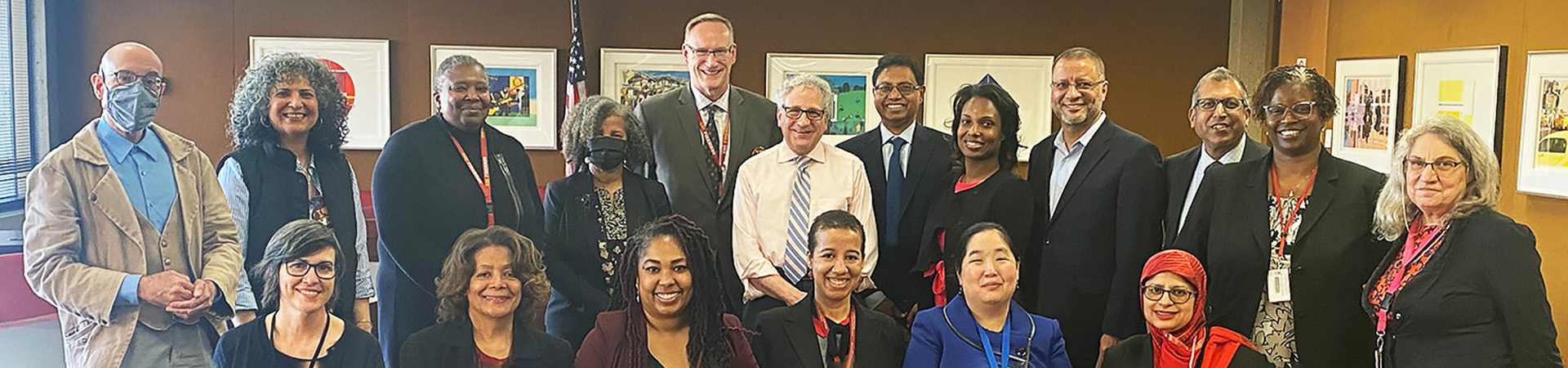
Members of the UDC Middle States Self Study team

Accreditation

Accreditation and Reaffirmation

As part of its accreditation review cycle, the University of the District of Columbia is deeply engaged in its Self-Study evaluation process, in anticipation of a peer evaluator site visit in Spring 2025. Accreditation serves to validate UDC’s academic quality, ensure continuous improvements, and uphold public accountability. This comprehensive evaluation encompasses all facets of the university’s mission and its effectiveness as an institution of higher education.

While UDC is already accredited, we are required to reaffirm our accreditation every eight years. Preparing for our next reaffirmation site visit in early 2025 involves over two years of groundwork, including the comprehensive institutional Self-Study report and supporting evidence.

Our accrediting body is the Middle States Commission of Higher Education (MSCHE), or simply “Middle States.” Middle States will evaluate UDC based on seven Standards of Accreditation, fourteen Requirements of Affiliation, and several federal and state-level compliance areas. Each of the Standards includes specific criteria that must be met and will be assessed by the Middle States team.

Middle States Commission on Higher Education (MSCHE)

The Middle States Commission on Higher Education operates as a voluntary, non-governmental membership association committed to ensuring quality assurance and enhancement through peer evaluation and accreditation. By upholding rigorous accreditation standards and enforcing them, Middle States fosters public confidence in an institution’s mission, goals, performance, and resources. Once an institution is initially accredited by the Middle States, it then engages in an ongoing eight-year cycle of review to retain its accredited status. This cycle includes regular reporting of the Annual Institutional Update, responses to any Middle States inquiries or policy revisions, and substantive change reports to reflect any major modifications to institutional operations, governance structure, or locations. The major review process completed every eight years is known as the Institutional Self-Study. UDC leverages the Self-Study as an opportunity to involve faculty, staff, administration, and other stakeholders in an in-depth analysis of the University’s strengths and areas for improvement. The three main outcomes of a successful Self-Study site visit are: 1) An inclusive campus process, 2) Demonstration of continuous improvement, and 3) Reaffirmation.

Visit the MSCHE website

The Self-Study process is a substantial undertaking, typically spanning two years from initiation to completion. The process reaches its pinnacle with a three-day on-campus visit from a team of external peer evaluators. During this visit, the evaluation team engages with administration, faculty, staff, students, and members of the Board of Trustees. They review materials and reports gathered throughout the Self-Study process. Following the three-day visit, the team provides a recommendation to the Commission regarding the university’s accreditation status.

Contact Us

For questions or comments related to the Middle States Reaffirmation process, please contact Associate Chief Academic Officer and Professor of English, Dr. Scott T. Krawczyk, at [email protected]

Back to Top
Take The Next Steps, Today!