Skip To Translation Selection Skip To Top Navigation Skip To Content Skip To Footer
Campus Alert
Campus Updates


Microsoft Exchange Online Service Disruption

Microsoft is investigating a service disruption affecting Exchange Online users across the Americas. The University of the District of Columbia (UDC) is impacted, and some users may currently be unable to access their email.

Full details


UDC Facilities Update

At this time, a definitive timeline for reopening Buildings 32 and 42 has not been established. The reopening of these facilities remains contingent upon the successful completion of repairs, testing, inspections and confirmation that the affected electrical distribution equipment can be safely re-energized.

For safety concerns, contact OPSEM at 202-274-5050. For emergencies, call 911.

Full details

Cycle of Continuous Improvement

Assessment at UDC

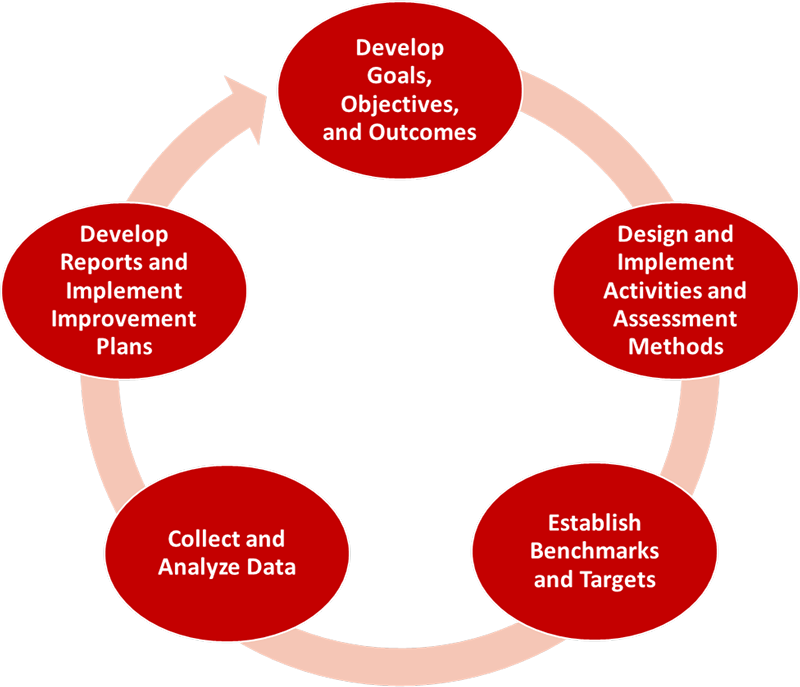
Eight Steps for Creating an Assessment Cycle in Your Program

  1. Define your purposeAssessment cycle flowchart

    1. Reference mission and vision statements
    2. Focus on improvement and demonstrated effectiveness
  2. Identify your goals

    1. Target approximately three at a time
  3. Identify aligned objectives and outcomes

    1. Generate specific, measurable, and observable aims
  4. Identify, design and implement your assessment activities

    1. Create and adopt assignments, projects, program activities, workshops, outreach efforts, customer service plans
  5. Identify, design and implement your assessment methods

    1. Use multiple (and mixed) methods, e.g., rubrics, checklists, surveys, focus groups, interviews, content analysis
  6. Create benchmarks and/or targets

    1. Identify standards and/or projected figures to achieve goals, objectives, and outcomes
  7. Collect and analyze data

    1. Write concise summaries and create data visualizations
  8. Develop report—include actions for continuous improvement

    1. Identify at least three actions in your improvement plan
    2. Demonstrate effectiveness
    3. Share report/findings widely with stakeholders
Tip

Be attentive to logistics and relevant processes, e.g., resource allocation, deliverables, timelines and responsible parties.
Back to Top
Take The Next Steps, Today!