Skip To Translation Selection Skip To Top Navigation Skip To Content Skip To Footer
Campus Alert
Update on Facilities Emergency as of Friday, Oct. 23

Following Tuesday morning's electrical incident originating in the mechanical room of Building 42, power disruptions impacted Buildings 32, 38, 39, 42, 43 and 47.

Power has since been restored to Buildings 38, 39, 43 and 47. Buildings 56 and 71 were not impacted by this incident. Additionally, Buildings 44, 46 east and 46 west were unaffected and remained fully operational throughout the event.

The university's electrical contractor continues to assess the damage and determine options for restoring and redistributing power to Buildings 32 and 42. As a result, Buildings 32 and 42 will remain closed through Monday, Nov. 2, while assessments are completed and necessary repairs or equipment replacements are identified and implemented.

Academic Operations

  • The School of Engineering and Applied Sciences (SEAS) will remain under Emergency Remote Instruction (ERI) while Buildings 32 and 42 are unavailable.
  • Classes for all non-SEAS students will resume normal operations.
  • Classes at the UDC David A. Clarke School of Law, Community College, Congress Heights campus and DCA Aviation Hangar will continue as scheduled.

Administrative Operations

  • Administrative and support functions at the Van Ness campus will resume normal business operations and maintain regular business hours.

Guidance for SEAS Faculty and Staff

  • SEAS staff should contact their immediate supervisors regarding remote work expectations.
  • SEAS faculty should consult their supervisors for ERI-related guidance.
  • The Center for the Advancement of Learning (CAL) remains available to support instructional continuity, including Blackboard, Zoom and other teaching and learning technologies.

CAL Faculty Support Resources

Guidance for SEAS Students

  • Due to this facilities emergency, SEAS in-person operations will remain suspended through Monday, Nov. 2. Instruction will continue remotely through both synchronous and asynchronous formats.
  • Courses requiring laboratory, clinical, studio or other hands-on instruction may require makeup sessions. However, every effort will be made to maintain academic continuity through virtual learning whenever possible. Faculty conducting synchronous instruction should continue to meet during published class times to minimize disruptions to student schedules.

The safety and well-being of our students, faculty, staff and community remain our highest priority. We will continue to provide updates as additional information becomes available.

Please continue to monitor the university website and official social media channels for the latest information.

For safety concerns, contact OPSEM at 202-274-5050. For emergencies, call 911.

Thank you for your flexibility, cooperation and continued commitment to UDC and our students.

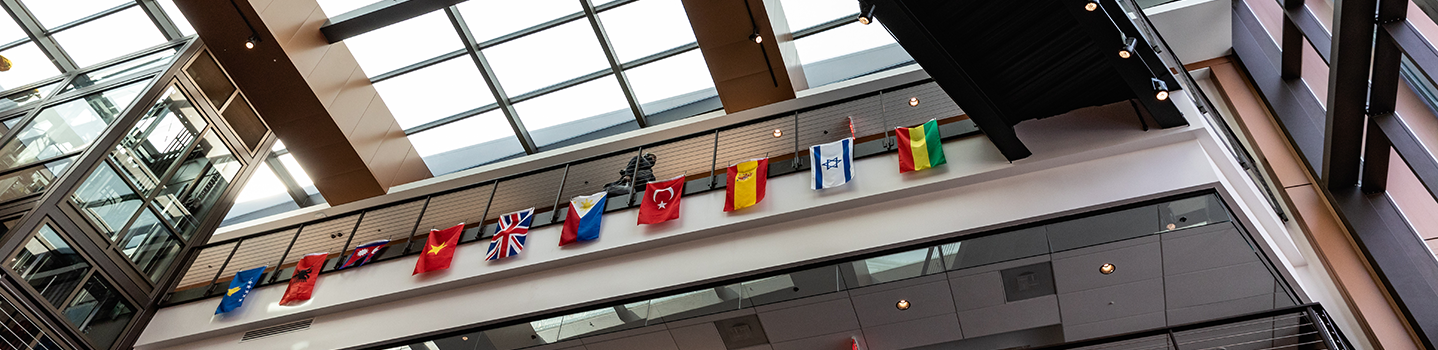
student center flags of different countries

Grievance Procedure

Applicability of Grievance Procedure

  1. Students who believe that they have been subjected to discrimination on the basis of disability, or have been denied access to services or accommodations as required by law, or denied participation in University programs and activities, have the right to use this grievance procedure.
  2. This grievance procedure is designed to address disputes regarding:
    • Disagreements regarding a requested service, accommodation, or modification of a University practice or requirement;
    • Inaccessibility of a program or activity; and
    • Harassment or discrimination on the basis of disability.

For the purposes of this policy, the above conduct is termed “discrimination or harassment.”

Informal Resolution Process

  1. As an alternative to the formal complaint procedure described below, students are encouraged to submit the matter in writing with the ARC. The written complaint should specify the time, place, and nature of the act claimed to be in violation and may be supplemented by supporting documents and/or written statements from persons having firsthand knowledge of the facts or other documentation and evidence, which the student believes supports the complaint.
  2. Within twenty (20) working days of receipt of the claim, the ARC will collect and investigate all pertinent facts and circumstances in support of the alleged violation. Investigation will include review and verification of all documentation, evidence and testimony by involved and/or knowledgeable parties.
  3. The ARC may attempt resolution of a complaint through mutual agreement of the affected parties at any point during the course of the investigation. Should such resolution be achieved, the investigation shall be ended.
  4. If no resolution results, or if direct contact is inappropriate under the circumstances, the student should then consult with the Section 504-ADA Coordinator who will attempt to facilitate a resolution through the formal grievance process.

Formal Grievance Process

If the informal grievance process above does not result in a successful resolution, then the student may file a formal grievance as follows.

  1. Complaints should be filed as soon as possible with:
    Thomas E. Redmond
    Office of the General Counsel
    4250 Connecticut Ave. NW
    Building 71, 7th Floor, Room 7226
    Washington, DC 20008
    202-274-5622
    [email protected]
  2. A complaint must be in writing and shall include the relevant name(s), date(s), and time(s), a detailed description of the allegations of discrimination or harassment, the type of discrimination alleged occurred, the names of any witnesses to the discrimination or harassment, requested corrective action and any other relevant information on which the complaint is based. A complaint of discrimination or harassment in educational programs or activities must be filed with the university within one hundred and eighty (180) calendar days following the date the alleged discrimination or harassment took place.
  3. The Section 504-ADA Coordinator will promptly initiate an investigation consistent with the University’s Anti-Discrimination and Harassment Policy.
  4. In undertaking the investigation, the Section 504-ADA Coordinator may interview, consult with and/or request a written response to the issues raised in the grievance from any individual the grievance officer believes to have relevant information, including faculty, staff, and students.
  5. The Section 504-ADA Coordinator will investigate the allegations brought by the complainant and work to conclude the investigation and conduct the exit interviews within sixty (60) calendar days, depending on the allegations presented. During the investigation, the Section 504-ADA Coordinator will:
    • Formally apprise the respondent of the charge of discrimination or harassment, in writing.
    • Elicit from the respondent an explanation of what occurred from his/her perspective.
    • Arrange for interim relief for the complainant, if appropriate.
    • Provide both parties with the opportunity to provide information and identify witnesses.
    • Investigate the allegations by conducting interviews or gathering other relevant information.
    • Attempt in a non-legalistic, non-threatening manner to facilitate a solution acceptable to both the complainant and the respondent.
  6. The Section 504-ADA Coordinator evaluates allegations and evidence to determine if, based on the totality of the circumstances, it is more likely than not that the alleged conduct in the complaint occurred. The findings of the Section 504-ADACoordinator is memorialized in a written report, which is solely for the University’s use.
  7. At the conclusion of the investigation, the Section 504-ADA Coordinator shall conduct an exit interview with the parties and issue exit letters notifying the parties of the outcome.
  8. Students who believe that they have been subjected to discrimination and/or harassment may be able to file a complaint with Federal and/or District government agencies, e.g., the D.C. Office of Human Rights or the U.S. Department of Education’s Office for Civil Rights. The university encourages students to utilize the internal complaint process prior to filing an external complaint.
Back to Top
Take The Next Steps, Today!