



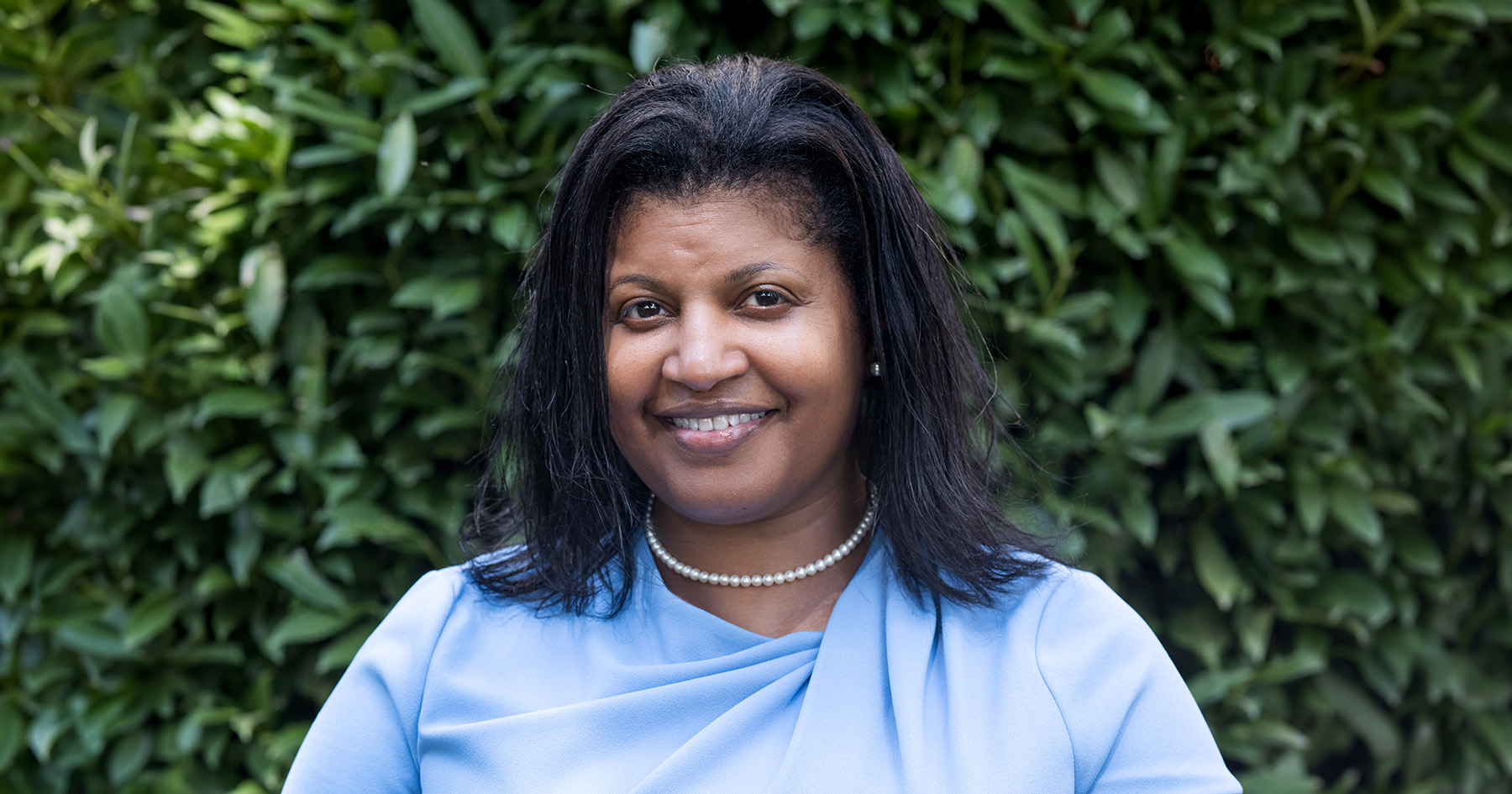
As UDC’s new vice president and chief contracting and procurement officer, Stephanie Johnson is bringing a vision for procurement that extends well beyond purchasing goods and services.
Johnson leads the Office of Contracting and Procurement (OCP) with a focus on strengthening and modernizing the university’s procurement operations, improving the experience for faculty and staff and expanding relationships with local, small and diverse businesses. Her approach positions strategic procurement as a tool for advancing student success and operational excellence while extending UDC’s economic impact across the District.
For Johnson, that connection is particularly important at the District’s public university. Through its purchasing power, UDC has an opportunity to support local businesses, foster economic development and ensure that institutional investments create value both on campus and in the communities the university serves.
We spoke with Johnson about what brought her to UDC, her priorities for OCP and how she sees strategic procurement supporting the university’s mission and the District it serves.
PLJ: What attracted you to UDC and this opportunity at this point in your career?
SJ: I was drawn to UDC because of its unique mission and the chance to help strengthen both the university and the broader DC community through my leadership. It is inspiring to work for an HBCU where the mission is not just aspirational but actively supported by a strategic plan that empowers meaningful impact and measurable change.
PLJ: What are your top priorities during your first 90 days as vice president and chief contracting and procurement officer?
SJ: The first 90 days have been both intensive and meaningful. One of my highest priorities has been ensuring that OCP is structured and staffed at an appropriate level to effectively serve the UDC community while also supporting the well-being of our dedicated team members. I am especially appreciative of the resilience, professionalism and commitment the staff have demonstrated during an extraordinarily difficult period. Their steadfast dedication to UDC has been inspiring.
As OCP continues to operate without pause, I have been actively engaged in day-to-day operations to help meet immediate needs while addressing increased activity that accompanies the final quarter of the fiscal year. I remain committed to strengthening our team, supporting our people, and ensuring we deliver the level of service the university deserves.
PLJ: What opportunities do you see to strengthen procurement and contracting processes across the university?
SJ: To strengthen contracting and procurement across UDC, it is essential to establish clear, written policies and standard operating procedures that are aligned with both regulatory requirements and system capabilities. Because many OCP processes are governed by District of Columbia law, providing the university community with transparent policy guidance will promote a shared understanding of the requirements under which UDC operates. This clarity will help set expectations, improve compliance, streamline processes, and enable requests to be addressed more efficiently and effectively.
PLJ: How can strategic procurement support UDC’s goals for student success, operational excellence and community impact?
SJ: Strategic procurement aligns institutional resources with institutional priorities, helping UDC achieve its mission while delivering measurable value to students, faculty, staff and the broader community. UDC has a unique opportunity to use its purchasing power to support local businesses. Strategic procurement can foster economic development, create partnerships that benefit the university and community and ensure that UDC’s investments contribute to long-term vitality.
I view strategic procurement as a key enabler of UDC’s mission. Strategic procurement ensures students have timely access to the resources, technology, facilities and services that support learning, academic achievement and workforce readiness. By strengthening supplier performance management and leveraging data-driven decision-making, procurement can improve efficiency, reduce risk, maximize the value of university resources and enhance service delivery across the institution. Clear policies and streamlined procedures will create a more predictable and transparent experience for stakeholders.
PLJ: Supplier engagement has been a hallmark of your career. How do you plan to build relationships with local, small and diverse businesses that want to partner with UDC?
SJ: To advance UDC’s mission and strengthen our impact on the District, OCP will intentionally cultivate relationships with local, small and diverse businesses seeking to partner with the university. Our approach will focus on increasing engagement, transparency and access through supplier outreach events, participation in small business roundtables and strategic partnerships with local business organizations and economic development agencies. UDC has a proud, longstanding history of exceeding its Small Business Enterprise goals, upon which we want to continue to build.
OCP will work to ensure prospective suppliers understand UDC’s procurement processes, contracting requirements and upcoming opportunities. Through these efforts, UDC can leverage its purchasing power to support economic growth in the District. Strategic procurement is not only about acquiring goods and services; it is about fostering sustainable partnerships that advance institutional excellence and community prosperity.
PLJ: What does modernization in procurement look like, and what benefits can the UDC community expect from those efforts?
SJ: Modernization in procurement means transforming procurement from a transactional function into a strategic, technology-enabled business partner that supports UDC’s mission. At the center of this transformation is leveraging the university’s Jaggaer procurement platform to create a more efficient, transparent and data-driven procurement environment while enhancing the system with robust contract management capabilities.
Through greater utilization of Jaggaer, UDC can automate key manual procurement activities. For faculty and staff, modernization translates into a more streamlined and user-friendly experience. Modernization also enables more effective use of data to better understand spending trends, identify opportunities for strategic sourcing, monitor supplier performance and make more informed business decisions. These insights will help maximize the value of university resources while supporting operational excellence.
A critical next step in this modernization effort is the implementation of integrated contract lifecycle management capabilities. By managing contracts within the procurement ecosystem, UDC can establish a centralized repository for university agreements, improve contract visibility, automate key milestones and renewal notifications and strengthen oversight of vendor performance and contractual obligations. This will reduce institutional risk, enhance compliance and ensure the university fully realizes the value of its negotiated contracts.
PLJ: Looking ahead, what would success look like for your division one year from now?
SJ: Success for OCP looks like being a trusted strategic partner that enables the university’s mission through efficient, transparent and compliant contracting and procurement. It means moving beyond simply processing transactions to delivering measurable value that supports student success, operational excellence and community impact.
Over the next year, that means delivering exceptional customer service through responsive support, clear communication and streamlined processes, while establishing policies, procedures and governance that create greater consistency, transparency and confidence in procurement decision-making. It also means leveraging technology, including the Jaggaer platform and contract management tools, to improve visibility, reduce cycle times and provide meaningful data for decision-making. Strengthening compliance and risk management will remain essential, as will building a high-performing OCP team with the resources, skills and capacity to support the university’s evolving needs.
Success will also mean developing strategic supplier partnerships that deliver innovation, quality and value while expanding opportunities for local small businesses. By using data and performance metrics to drive continuous improvement, monitor supplier performance and maximize the stewardship of university resources, OCP can continue evolving into a more strategic and effective partner across the university.
Ultimately, success is reflected when the UDC community experiences procurement as a seamless and value-added function — one that consistently delivers timely solutions, supports institutional priorities, fosters accountability and contributes to the long-term success of the university.