


Summer Session: Faculty Conversations Beyond the Classroom is a summer series highlighting the many ways University of the District of Columbia faculty continue advancing the university's mission beyond the academic year. Through research, professional development, community engagement and preparation for the year ahead, faculty remain actively connected to their disciplines, students and communities.
For the first installment of the series, we spoke with Davide Prete, associate professor of art, about public art, creative inspiration, international travel and the projects shaping his summer.
PLJ: What does summer typically look like for you once the academic year ends?
DP: For me, summer is usually a highly active and creative time. When the academic year ends, I shift from teaching in the classroom to working more intensely in the studio, developing public art projects, testing materials, preparing proposals, writing and researching. It is also a time when I reconnect with my own artistic practice through travel, drawing, and direct observation.
As an artist and professor, I see summer as a bridge between professional practice and teaching. The work I do during these months often becomes part of what I bring back to my students in the fall: new projects, new technical challenges, new research and new examples of how art can exist in public and community spaces.
PLJ: Are there any projects, research, professional development opportunities or community initiatives you are focusing on this summer?
DP: This summer I am focusing on several public art projects and research initiatives. Early in the summer, I will be working on the installation of my sculpture Blooming Life in its new permanent location at the James M. Stockman Cancer Institute in Frederick, Maryland. This is a meaningful project because the work will become part of a healthcare environment, where public art can contribute to reflection, hope and a more welcoming experience for patients, families, staff and visitors.
One of the major new projects I am developing is a public artwork for the new Community Recreation Center in Grand Junction, Colorado. The project involves creating a sculptural donor recognition artwork inspired by the landscape and civic identity of the area.
I am also working on a public art project for Bowie, Maryland, which continues my interest in creating artworks that are connected to place, community, and shared public experience. Like many of my recent projects, this work involves thinking about how sculpture can activate a public space, invite interaction and become part of the identity of a neighborhood or civic environment.
In Washington, DC, I am collaborating with Tenleytown Main Street on a public art grant proposal that would create a sculptural artwork designed to strengthen neighborhood identity and community engagement. The project aligns closely with UDC's mission of serving the District through community partnerships.
I am also continuing work on two monographs documenting my sculpture practice and research at the intersection of traditional craft, architecture, digital fabrication and public art.
In addition, I will be leading and participating in a drawing experience in Italy. Drawing from architecture, landscape and historical sites has always been central to my formation as both an artist and an architect. Returning to Italy to draw, observe, and study directly from place allows me to reconnect with the foundations of my practice and bring that experience back to my students.
I am also currently on the roster of the Fulbright Specialist Program, and I am exploring opportunities to collaborate with institutions outside the United States during my upcoming sabbatical. I see this as an important opportunity to expand international partnerships, share my research in sculpture, public art and digital fabrication, and bring new global perspectives back to UDC students.
PLJ: What trends or changes in your field are you paying the closest attention to right now?
DP: I am paying close attention to how public art is becoming increasingly collaborative, interdisciplinary and community-centered. Public art today is increasingly about creating opportunities for communities to participate and see themselves reflected in the final work.
I am also very interested in the relationship between traditional artistic skills and new technologies. Tools such as 3D modeling, digital fabrication, CNC cutting, artificial intelligence and interactive systems are changing how artists design and produce work. At the same time, I believe these tools are most powerful when they are connected to drawing, material knowledge, craftsmanship and human experience.
Another important trend is sustainability. Artists are thinking more carefully about materials, fabrication methods, durability, maintenance and the long-term impact of public artwork. In my own work, I often explore the relationship between traditional materials such as bronze, steel, wood and ceramics and newer technologies such as 3D printing, parametric design and digital fabrication.
PLJ: How does the work you do during the summer help shape the student experience at UDC during the academic year?
DP: The work I do during the summer directly shapes my teaching at UDC. When I teach sculpture, public art, drawing, interdisciplinary art, or digital fabrication, I am not teaching only from theory. I bring real examples from current professional projects into the classroom.
Students can see how an artist develops a concept, works with clients and communities, solves fabrication challenges and prepares work for installation in public spaces. These examples help students understand the professional realities of being an artist, designer or creative professional.
Whenever possible, I also create opportunities for students to connect with real projects, whether through research, design, fabrication, documentation, or community engagement. My goal is to help students understand that art can move beyond the studio and become part of civic life. Public art can create identity, support neighborhoods, generate dialogue and make communities more visible.
PLJ: What is one thing you are especially looking forward to in the upcoming academic year?
DP: I am especially looking forward to bringing new public art opportunities, international experiences and research back into the classroom. I want to continue helping students connect drawing, sculpture, technology and community engagement.
I am also looking forward to supporting students as they develop their own voices and begin to see themselves not only as students, but as artists, designers, researchers and contributors to the cultural life of Washington, DC. UDC has a very special role in the city, and I believe our students can have a meaningful impact on the visual and cultural landscape of the District.
PLJ: What is something people might be surprised to learn about how you spend your summers?
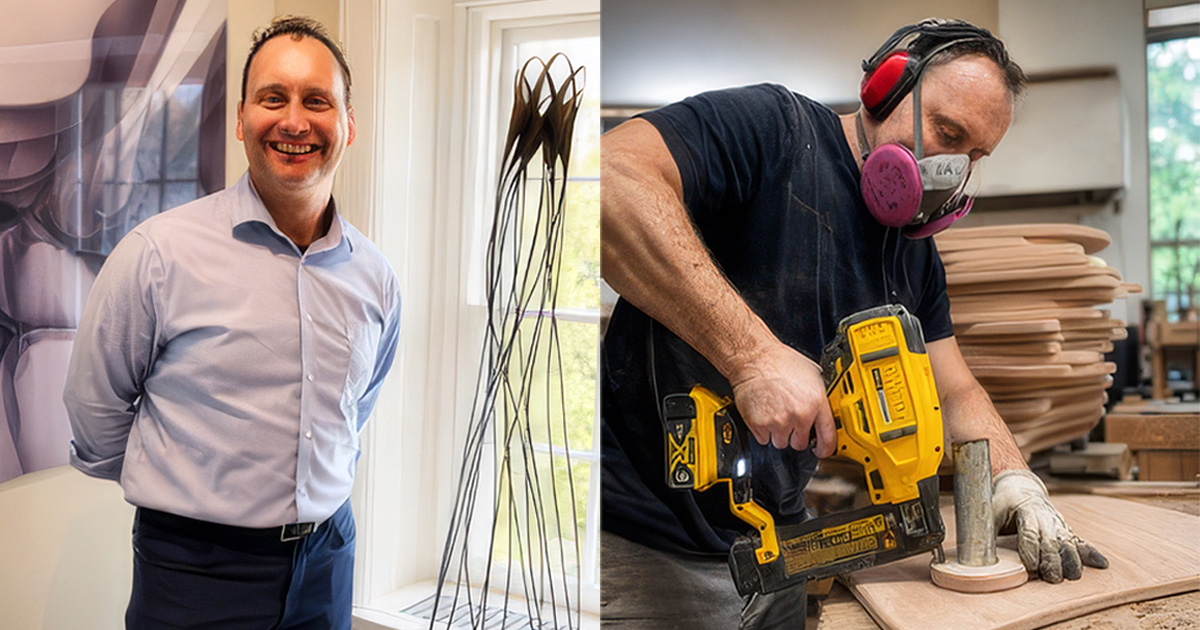
DP: People might be surprised to learn that my summers are often as busy as the academic year, just in a different way. A typical summer may include installing a sculpture at a cancer institute, drawing in historic Italian towns, welding in the studio, reviewing fabrication drawings, sanding and finishing sculpture components, writing for a monograph, visiting public art sites, preparing community presentations, and testing materials late into the evening.
For me, summer is not a pause from teaching. It is the time when I gather new experiences, projects and questions that later become part of my teaching. My work as an artist and my work as a professor are deeply connected, and the summer gives me the opportunity to strengthen that connection.