



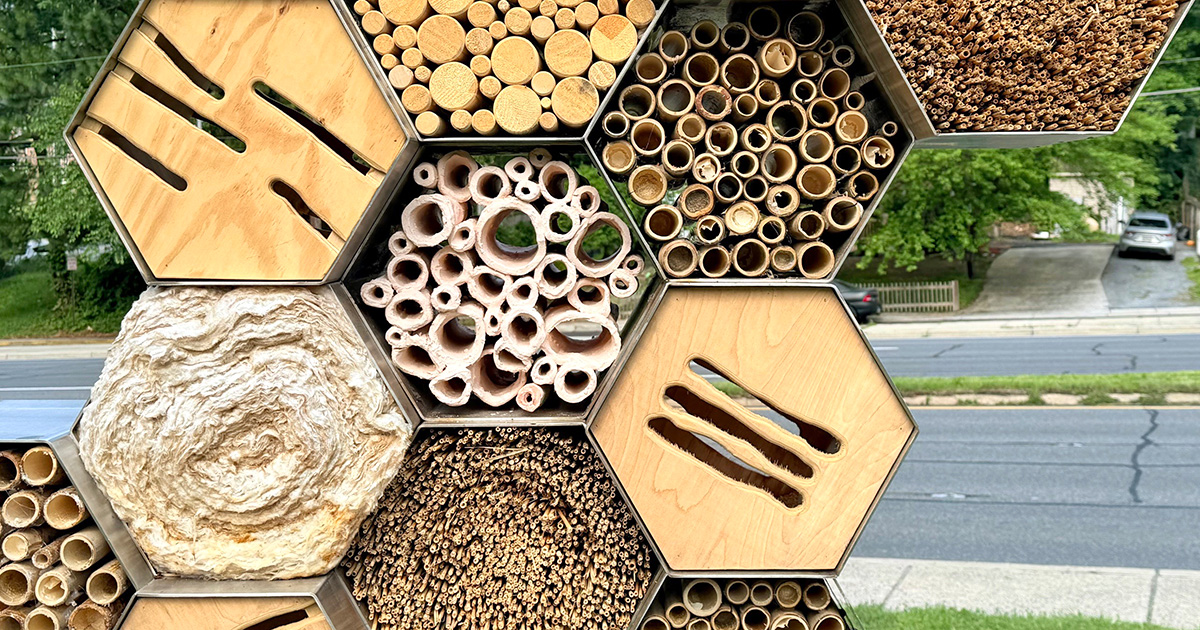
“The Hexa-Habitat: A Sacred Geometry Experience” is a 10-foot public sculpture created by local artists Davide Prete, a UDC art professor, and senior art major Dehejia Butler through the university’s Interdisciplinary Art Class. Installed this summer outside the Takoma Park Recreation Center, the piece resembles a giant beehive, its honeycomb-shaped chambers built from clay, bamboo and native shrubs that draw in pollinators. Supported in part by the Maryland State Arts Council, it stands as the city’s largest public art commission in more than a decade.
More than a striking sculpture, Hexa-Habitat captures the spirit of UDC’s strategic plan, “Delivering on the Promise.” The sculpture shows how creativity and sustainability can work hand in hand to build community, inspire curiosity and connect people to the world around them. I recently caught up with Butler to hear her reflections on this monumental work.
PLJ: What was the inspiration behind the design of Hexa-Habitat and how did the idea of sacred geometry come into play?
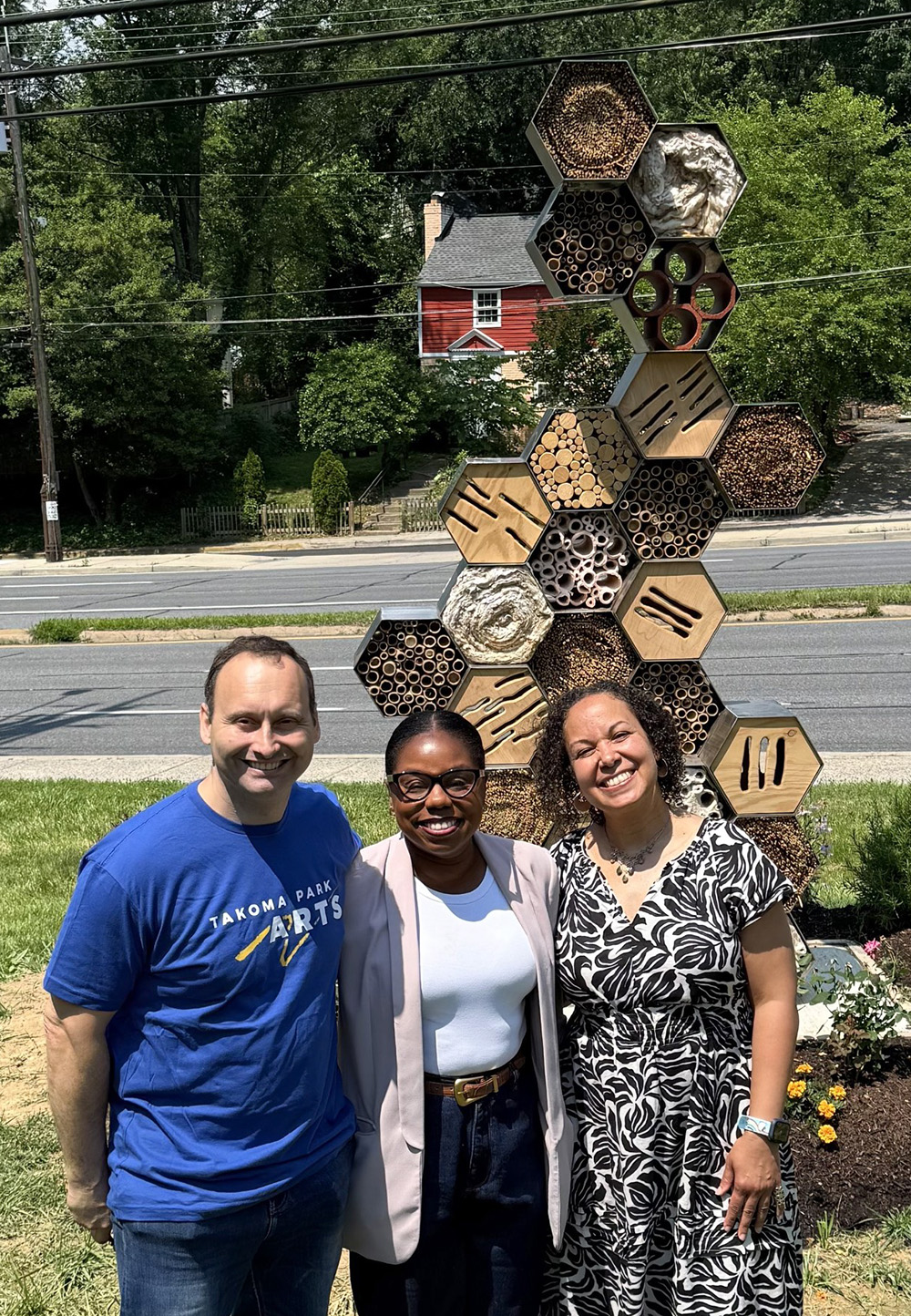
DB: The inspiration came from observing the intrinsic patterns in nature, particularly those found in beehives, crystals and flower petals. Sacred geometry felt like a natural foundation because it’s a language that bridges art, science and spirituality. The hexagonal form is both efficient and harmonious, making it a perfect structure for building something that supports life, both visually and ecologically.
PLJ: How did your collaboration with Professor Prete begin and how did your creative styles complement each other throughout this project?
DB: Our collaboration began through a mutual interest in large sculptures and sustainable design. Professor Prete brought experience with navigation in the creation of public art as well as an intuitive, form-focused approach, depth and ecological perspective that grounded my work. While I leaned into visual storytelling and sculptural language, he brought precision to the environmental function of the habitat. It was truly a balance of form and function.
PLJ: Can you describe your role in the creation of the sculpture? What elements did you focus on most?
DB: I developed the concept for this sculpture as part of an assignment in my interdisciplinary art class at UDC during the spring semester. My primary focus was on creating a sacred geometry-inspired sculptural form that could serve both as an art piece and as a functional habitat to attract pollinators. I carefully selected materials that would appeal to native bees, hummingbirds, butterflies, wasps and dragonflies, ensuring each component felt both organic and intentional. I also emphasized visual and tactile harmony by incorporating clay, bamboo and wood elements that invite curiosity about the sculpture’s purpose and form.
PLJ: What message do you hope people, especially children, take away about the relationship between art, nature and community?
DB: I hope they see that these aren’t separate things. Art can teach us about ecosystems, and nature can inspire creativity. By placing something beautiful and functional in a shared space, we’re inviting people — especially kids — to ask questions, to observe and to feel a sense of care for the creatures we share space with. It’s a reminder that small actions can make an enormous difference, and beauty can have purpose.
PLJ: You used natural materials like fired clay and bamboo for the insect habitats — can you walk us through how you selected and worked with these?
DB: Clay and bamboo were chosen both for their ecological benefits and their tactile qualities. Clay holds warmth and moisture well — ideal for nesting insects — and can be shaped into intricate patterns. Bamboo, being both strong and lightweight, offered structural and visual contrast. Time was spent sourcing these materials responsibly, and we shaped them, ensuring every piece had a sense of craftsmanship and purpose.
PLJ: Were there any unexpected challenges in designing a sculpture that also functions as a habitat?
DB: Absolutely. One of the biggest challenges was balancing aesthetic ambition with ecological needs. For example, the structure needed to be visually open to draw people in yet protected enough to provide a safe space for insects. Ventilation, water drainage and weather resistance were all things we had to consider without compromising the visual design.
PLJ: What has been the most rewarding part of seeing Hexa-Habitat come to life in the Takoma Park community?
DB: Seeing children point out the tiny inhabitants or hearing someone say they’ve never thought about bugs as “neighbors” before, that’s the magic. The community has embraced it not just as a sculpture but as a conversation piece and learning tool. It’s become part of the landscape both physically and emotionally, which is more than I could have hoped for.
PLJ: Do you have any future projects that continue this intersection of art, ecology and public engagement?
DB: Yes, this project has opened new paths I’m eager to explore. I’m currently conceptualizing a series of smaller “micro-habitats” that can be installed in schoolyards and community gardens. Each will be site-specific, combining environmental education with participatory artmaking. The goal is to keep weaving these threads between ecology and everyday spaces. I am also working on refining the original Hexa-Habitat coloring book we handed out at the opening party. This new book will have more pages and information about pollinators and the plants they love.