


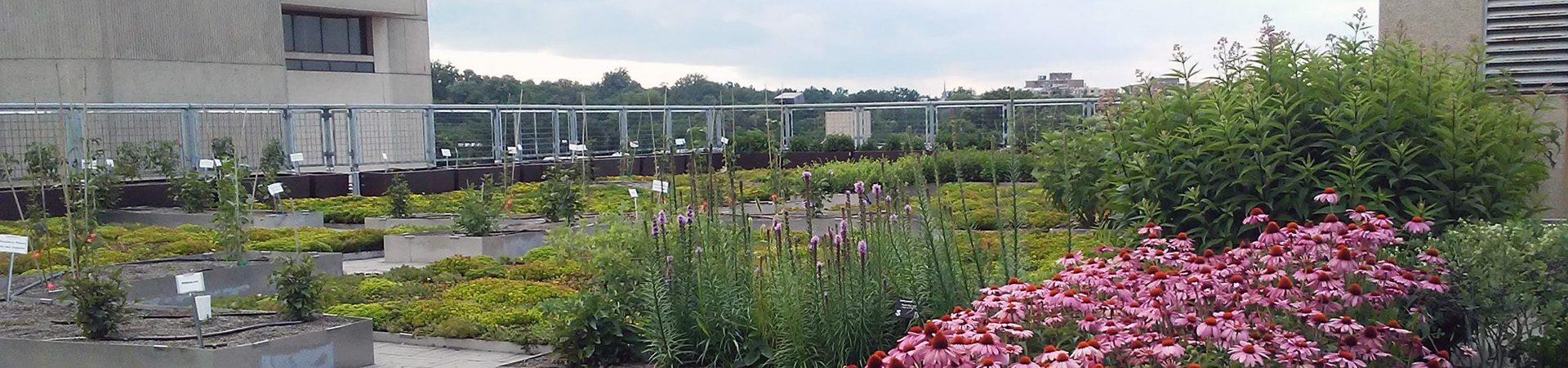
UDC Green Roof: A Living Laboratory for Urban Horticulture and Sustainability
Since 2016, the University of the District of Columbia’s College of Agriculture, Sustainability and Environmental Sciences (UDC-CAUSES) has nurtured a pioneering 20,000-square-foot green roof atop Building 44 on the Van Ness campus. This innovative rooftop ecosystem serves as a vibrant demonstration site for stormwater management, energy efficiency, and urban agriculture—while providing aesthetic enhancement, extended roof longevity, and valuable community benefits.
What sets UDC-CAUSES' urban green roof apart is its focus on productive, food-growing ecosystems. The vegetated roof features shallow-soil zones for microgreens, lettuces, and herbs; deeper perimeter planters supporting diverse crops including tomatoes, peppers, eggplant, okra, beans, and berry bushes; a greenhouse; and vertical hydroponics. The green roof functions as a compact, urban counterpart to UDC’s 143-acre Firebird Research Farm in Beltsville, Maryland. By capturing and recirculating rainwater, reducing urban heat island effects, improving air quality, and lowering building energy demands, this eco-roof delivers tangible environmental and economic solutions for District residents.
In 2024, UDC-CAUSES Center for Urban Resilience, Innovation, and Infrastructure (CURII) has evolved the green roof into a dynamic hub advancing the land-grant mission through three interconnected pillars:
- Research: Conducting applied studies on crop performance in rooftop environments, resilient plant varieties, soil-less growing techniques, and climate-adaptive horticulture to address urban food security and environmental challenges.
- Extension: Delivering outreach, workshops, tours, and technical assistance to community gardeners, urban farmers, Master Gardeners, and District stakeholders—promoting sustainable practices that enhance local food systems and green infrastructure.
- Education: Providing hands-on learning opportunities for students in urban agriculture, sustainability, and horticultural sciences—fostering the next generation of leaders equipped to transform cities through innovative, science-based solutions.
As the largest green roof in the District of Columbia, this living laboratory continues to demonstrate how integrated horticultural approaches can mitigate climate impacts, boost biodiversity, produce nutritious food, and inspire sustainable urban development.