


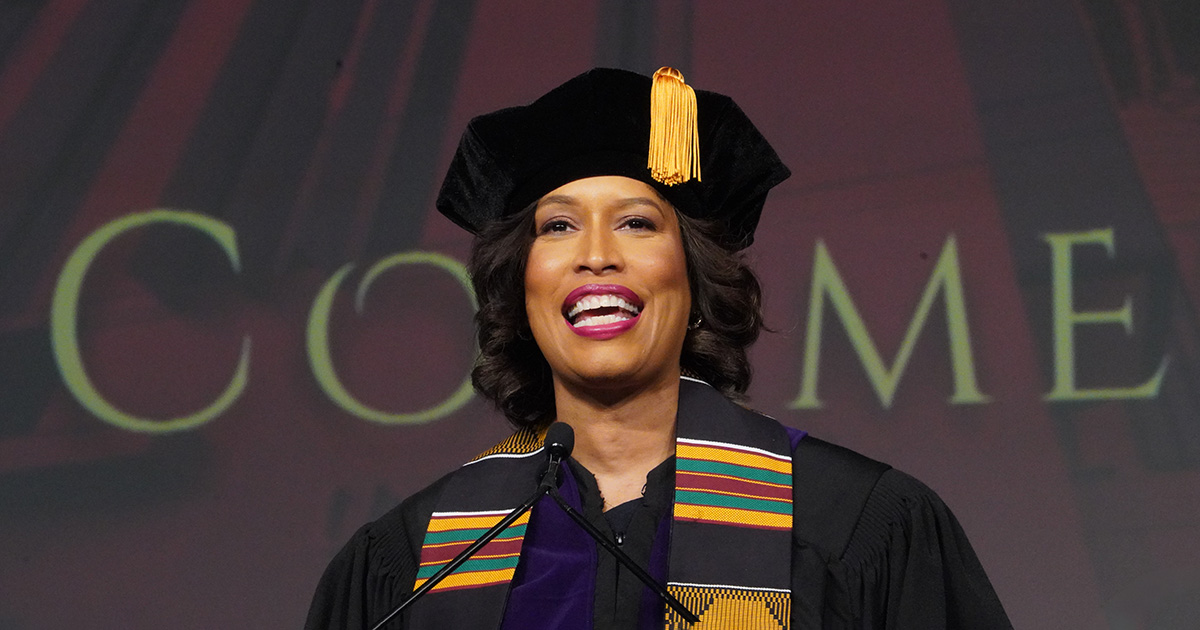
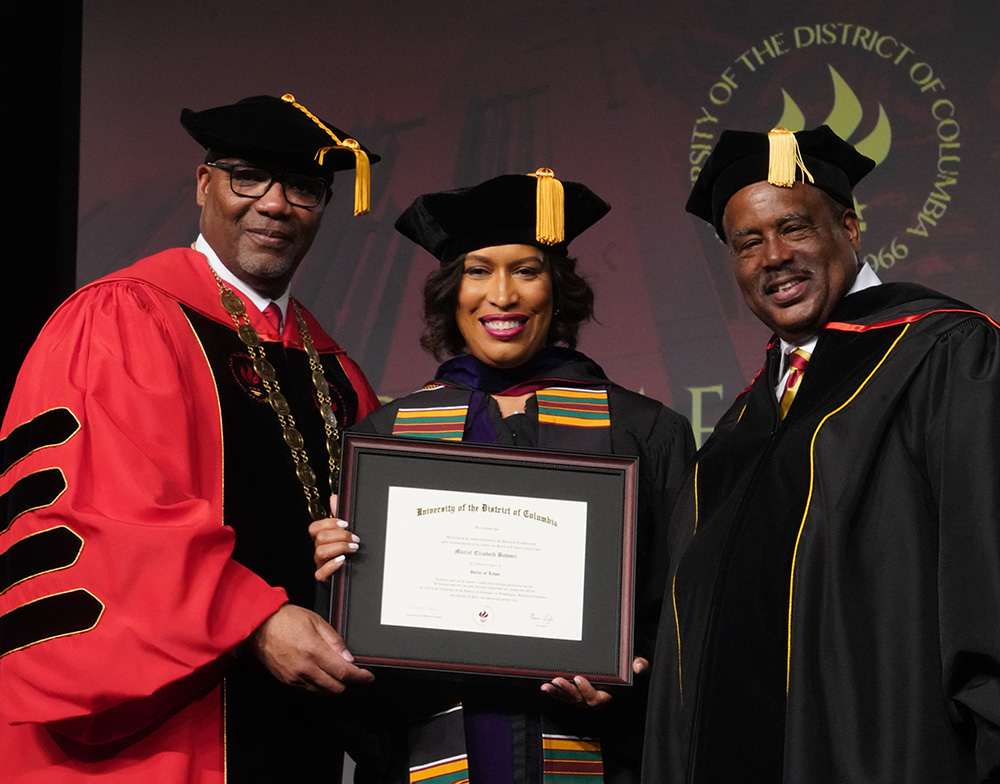
Ahead of the University of the District of Columbia’s 49th Commencement ceremony, D.C. Mayor Muriel Bowser reflected on the university’s growing role as a workforce engine for the District, her partnership with President Maurice D. Edington and the importance of preparing students for a rapidly changing economy. In a conversation with UDC, Bowser — the daughter of a UDC alum — also spoke about the university’s long-standing role as a pathway to opportunity for Washingtonians and her hopes for the institution’s future as it continues its 175th anniversary celebration.
PLJ: President Edington has often praised your leadership and investment in UDC and the District. How do you approach that responsibility — ensuring that those investments expand opportunity for students and communities across Washington, DC?
MB: I approach it with a clear expectation: investments should translate into outcomes for DC residents. Every investment we make in UDC should expand opportunity, strengthen our workforce, and help more Washingtonians build stable, successful futures here in our city. That’s why we’ve steadily increased our support for UDC from a $71 million in FY16 to more than $100 million today, alongside significant capital investments across the UDC campuses.
When we invest in UDC, we are investing in a complete pathway for DC residents, from free, universal pre-K to earning a law degree from a nationally recognized HBCU. That investment strengthens not only individual students and families, but the future of Washington, DC itself.
PLJ: What outcomes will tell you that the District’s investments in UDC are truly working?
MB: We look at how students are doing. Are students completing their degrees? Are they entering high-demand industries? Are they building careers and staying in Washington, DC?
We also look at whether UDC’s programs are aligned with the realities of the modern economy. We don’t want to be preparing students for jobs that don’t exist anymore. Success ultimately means students are leaving UDC with the tools, credentials, and experience they need to succeed in a changing economy.
PLJ: As graduates prepare to enter the workforce, where do you see the greatest opportunities for them here in Washington, DC?
MB: We know there is strong demand and long-term growth in fields like healthcare, education, technology, infrastructure, sustainability, and the skilled trades. Those sectors are critical to the future of our city and region. At the same time, the workforce is evolving rapidly. We need to figure out how we live, work, and thrive as autonomous humans engaging with autonomous machines.
One thing I’m especially proud of is that UDC has consistently partnered with us to respond to workforce needs in real time with initiatives like the DC Infrastructure Academy, the PEPCO Utility Training Program, the Advanced Technical Centers, the new paramedic program, and the Apprenticeship in Teaching program.
We’ve partnered with UDC on public safety pathways as well. MPD recruits can now earn college credit while completing the Training Academy, and members of the MPD Cadet Corps attend UDC Community College while gaining hands-on experience in public service.
These partnerships represent how deeply intertwined UDC is with our community.
PLJ: You have a personal connection to UDC as the daughter of an alum. How has that connection shaped the way you view the university and its role in the city?
MB: My mother attended UDC as a working mother of five children. She earned her degree and went on to have a distinguished nursing career. That experience shaped how I view UDC as a pathway to economic mobility and opportunity for Washingtonians. For generations of residents, UDC has opened doors for people balancing work, family, and school while trying to build a better future. That mission remains incredibly important to our city today.
PLJ: President Edington has emphasized the importance of strong partnerships between the university and the District. How would you describe your working relationship with him, and how has that collaboration helped move UDC forward?
MB: President Edington is one of the strongest champions for UDC that you will find. He has been clear about his goals for the university, and more importantly, he has been focused on delivering results. He has a strong vision centered on student success, accountability, workforce alignment, and partnerships, and that alignment between the university and the District has allowed us to move important initiatives forward together.
Whether we are expanding workforce pathways, improving student support systems, modernizing campus infrastructure, or strengthening connections between academic programs and employers, our collaboration has been focused on ensuring UDC continues to serve both students and the broader needs of Washington, DC.
PLJ: As you look ahead to the next five to 10 years, what do you hope UDC becomes — and what role do you see it playing in the future of Washington, D.C.?
MB: For 175 years, UDC and its predecessor institutions have evolved to meet the needs of Washington, DC, and I believe that evolution will continue. I see UDC continuing to grow as a premier urban, public, land-grant university and HBCU that is deeply connected to the workforce and economic needs of our city. I want UDC to continue being a place that not only educates students, but anticipates where the economy is headed and prepares residents for those opportunities before the market demands them.
PLJ: And as you look beyond your time in office, how do you hope to stay connected to UDC and its students?
MB: I’ll still be in Washington, DC, and UDC alumni are involved in virtually every sector of our city. So, I know I’ll stay connected to the university, its students, and its graduates through the work we all do together to strengthen our city and support the next generation of Washingtonians.
PLJ: When you address the graduates at Commencement, what message do you hope they carry with them—not just today, but in the years ahead?
MB: I want graduates to leave knowing that they are prepared and that they now have a responsibility to use that preparation to build something meaningful, not only for themselves, but for their communities as well. The world is changing quickly, and success will require adaptability, resilience, and a commitment to lifelong learning.
But I also want them to understand that there is tremendous opportunity right here in Washington, DC. Our city needs their talent, leadership, and ideas, and we are counting on them to help shape what comes next.
UDC’s history shows what is possible. Alumni like John Thompson, Kojo Nnamdi, Cathy Lanier, Judge Norma Holloway Johnson, Nadine Winter, and H.R. Crawford helped shape this city through leadership in sports, media, public safety, government, and the law. Today’s graduates now have the opportunity to build on that legacy and make their own lasting impact on Washington, DC.