


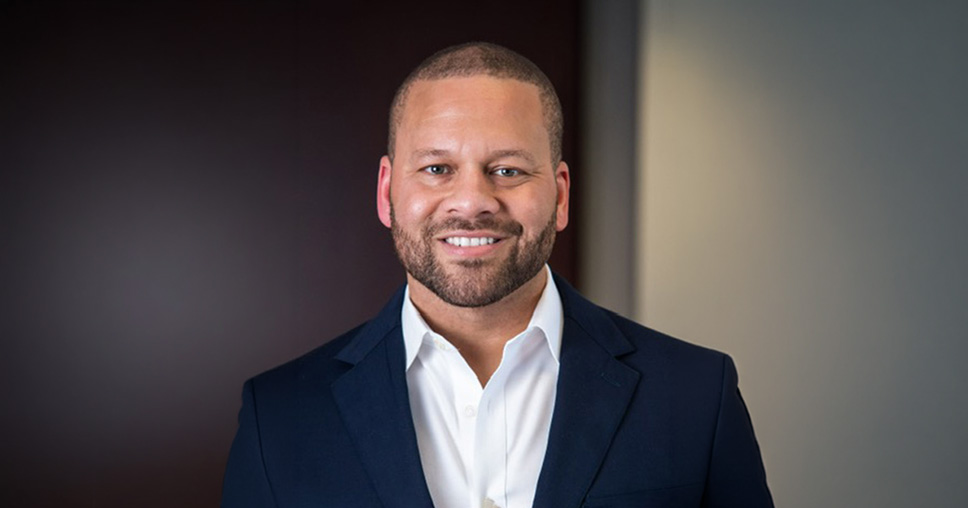
As the University of the District of Columbia marks its 175th anniversary, the institution is reflecting on its history and the responsibility that comes with being the District’s public university. In this interview, Dean Dwane Jones of the College of Agriculture, Urban Sustainability and Environmental Sciences (CAUSES) shares his perspective on UDC’s legacy, its mission of access and opportunity, and the path forward for the next generation of Firebirds.
PLJ: As UDC marks its 175th anniversary, what does this milestone mean for CAUSES and its land-grant mission?
DJ: The University of the District of Columbia is the only public university in Washington, D.C., and the only exclusively urban land-grant university in the United States. Formed in 2010, CAUSES is a land-grant college within UDC. It is the community-focused expression of UDC’s founding mission: serving District communities and touching the world.
At 175 years, this milestone is an invitation to reflect on how far that mission has evolved — from a school founded by an abolitionist in 1851 to a college that is now literally growing food in food deserts across Washington, D.C., connecting people and communities.
PLJ: How does CAUSES connect education, research and community impact in ways distinct to UDC and the District?
DJ: CAUSES occupies a unique space in higher education. It is the nation’s only exclusively urban land-grant college and offers the nation’s only doctoral-level program in urban leadership and entrepreneurship. CAUSES blends traditional degree programs with community outreach and engagement initiatives, including green infrastructure, urban gardening and programs at the 143-acre Firebird Research Farm and three specialized land-grant centers dedicated to urban agriculture, resilience, nutrition, gerontology, youth development and water resources.
What makes this distinct to UDC and the District is that the “community” CAUSES serves is also the city in which it is embedded. D.C. has no rural hinterland — every challenge CAUSES addresses, from food insecurity to stormwater management to chronic disease, is tackled by CAUSES faculty members and students. The impacts can be traced to measurable effects on D.C. residents.
PLJ: What is one initiative or outcome that best reflects CAUSES’ impact on food systems, sustainability or environmental resilience?
DJ: The Urban Food Hubs network stands out as CAUSES’ most impactful proof of concept. In Ward 7 of Washington, D.C., there are only four full-service grocery stores for 71,000 residents. To help improve access to food, UDC partnered with the D.C. Housing Authority in 2015 to start the East Capitol Urban Farm.
What began as a single farm evolved into a multi-site model that addresses the full food system cycle. The Urban Food Hubs concept tests the feasibility of small-scale urban food systems that encompass food production, preparation, distribution, and waste reduction and reuse. The heart of the CAUSES Urban Food Hubs is high-efficiency food production sites that use bio-intensive, aquaponic and hydroponic methods.
Beyond producing food, UDC-CAUSES and Pepco-Exelon partnered to develop an “Ag Pod” — a 400-square-foot vertical hydroponic production facility that enables year-round food production and demonstrates what the future of agriculture could look like in urban environments balancing high demand for fresh produce with limited space. The Food Hubs are simultaneously research sites, classrooms and community gathering spaces.
PLJ: How does CAUSES engage directly with D.C. communities to translate research into real-world solutions?
DJ: CAUSES’ Urban Food Hubs are in specific D.C. wards — particularly Wards 7 and 8, which bear the heaviest burden of food insecurity and health disparities in the District. The P.R. Harris Food Hub in Ward 8 grows fresh vegetables and fruits for free distribution throughout historically disenfranchised communities.
Since distribution is donation-based, produce moves through local nonprofits, churches and community organizations that serve residents most in need, including seniors, at-risk youth and individuals experiencing homelessness.
CAUSES also translates research into skills residents can use directly. Through the Center for Urban Agriculture and Gardening Education (CUAGE), the Master Gardeners program provides participants with extensive training in topics such as plant pathology, entomology, urban soils and plant propagation, and participants give 9,000 volunteer hours back to the city annually. Research isn’t handed down to communities — it is co-created with them through training workshops, farmers markets, demonstration kitchens and aquaponics education that meet residents where they are.
PLJ: What opportunities do students gain through CAUSES that prepare them for careers rooted in service and innovation?
DJ: CAUSES graduates are prepared to solve urban problems, committed to health and wellness and food and water security, skilled at navigating diverse social, cultural, built and natural environments, independent thinkers, collaborative team players and adaptive lifelong learners. Those are not abstract graduate attributes — they describe people who have worked on real urban farms, conducted environmental science research and engaged with D.C. communities as part of their coursework.
Students in the Urban Sustainability program, for example, can choose from a wide range of internships offering hands-on experience in sustainable project design, implementation, maintenance and assessment. Meanwhile, the Ph.D. Program in Urban Leadership and Entrepreneurship produces what CAUSES calls “scholar-practitioners” — people equipped to lead organizations, shape policy and innovate in environments where academic rigor and community accountability must coexist. Across all its programs, CAUSES trains students not just for jobs but for vocations — careers that matter to the places and people they come from.
PLJ: Looking ahead, what excites you most about CAUSES’ role in UDC’s future?
DJ: The most exciting prospect is scale — taking what CAUSES has proven works in individual D.C. wards and building systems that can reach every corner of the city and serve as a replicable model nationally. CAUSES has stated its goal of establishing at least one urban food hub in each of the eight D.C. wards. Achieving that would mean a citywide infrastructure of food production, nutrition education and environmental resilience, designed and maintained in partnership with the communities it serves.
At a broader level, CAUSES is increasingly relevant to the defining challenges of our era — environmental adaptation, urban food security, community health and sustainable infrastructure. CAUSES land-grant programs are positioned to advance goals that include improving food security, mitigating environmental changes, combating childhood obesity and food-related illness, and expanding alternative energy solutions. As those challenges intensify, an institution that has been building this infrastructure for over a decade — in one of the most complex and unequal cities in America — is poised to become not just a local asset but a national model for what a 21st-century land-grant university can be.