



Thursday, Sept. 28, 2023
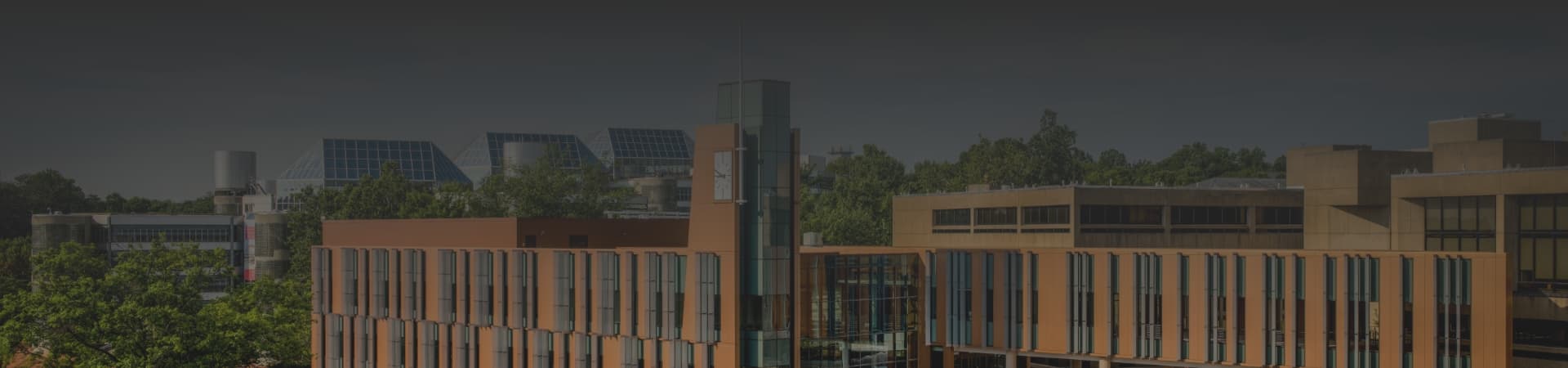
UDC Student Center
Good morning, and welcome to our beautiful Van Ness campus at the University of the District of Columbia.
I am Dr. Maurice Edington, President of UDC, and I am honored to be here with you today as we gather to celebrate the achievements – and contemplate the future – of historically Black colleges and universities.
I would like to recognize UDC Board of Trustees Member Barrington D. Scott, who you’ll be hearing from later this morning. I’d also like to thank the organizers of the HBCU Futures Conference, including The HBCU Advocate, for the incredible opportunity to host this event.
We join here today at the second-oldest HBCU in the nation. The University of the District of Columbia dates back to 1851, when abolitionist Myrtilla Miner founded a teaching school for young Black women. Today, UDC is a multifaceted educational institution producing lifelong learners who are transformative leaders in their field.
As some of you know, I am new to UDC. About two months ago, I packed up my home in sunny Florida after a more-than-two-decade run at Florida A&M University.
We accomplished a lot at FAMU while I was there, including increasing enrollment, boosting student retention and raising the university’s national rankings. But after 25 years, I was looking for a new place to make an impact – even if it meant saying goodbye to my floral button-down shirts for good.
UDC was attractive from the start. It’s the only public institution of higher learning in our nation’s capital. The only exclusively urban land-grant university in the U.S. Offering more than 80 academic programs.
The University provides a pathway for just about anyone looking to advance their knowledge and/or their career: We offer workforce training credentials, associate and bachelor’s degrees, Ph.D. and law programs. In fact, I sometimes describe the University as an express train, welcoming people aboard wherever they are and wherever they want to go – why call Uber or hop on a bus when the UDC train is coming right to your house?
Since I began my tenure here about two months ago, we have hit the ground running. We have been laser-focused on making our great institution even greater – advancing our mission to offer high-quality academic programs and an exceptional student experience, broadening our impact with research grants and new partnerships, and providing even more opportunities for underserved populations.
And since I took office, I’ve come to discover another attribute that is a hallmark of UDC. In addition to its academic excellence and its accessibility, UDC is on fire with pride.
You can see it in our students as they stroll across Dennard Plaza on our Van Ness campus. Or through the halls of our Community College in the Lamond Riggs neighborhood. Or around our Workforce Development and Lifelong Learning campus in Congress Heights.
You can see it in our faculty as they take the time to explain a challenging concept to a struggling student, or as they cheer on our Firebird athletes at a home game.
You can hear it in the words of our Board members, speaking to the legacy of this institution. Or in the awe-inducing voices of our UDC Chorale, imparting us with the words of our alma mater:
A path that’s paved in red and gold
Leading to the dreams life holds
Inspiring every growing mind
To conquer mountains hard to climb.
You can feel that Firebird pride all over our campuses – because it’s part of who we are.
And UDC is not the only HBCU where pride is in the air.
At historically Black colleges and universities across the country, you’re likely to find a similar sense of excitement, a similar fervor, a similar commitment to the foundational values that an HBCU represents.
Our institutions have a long, complex history. Out of the tremendously fraught, racially charged environment that preceded and followed the Civil War came many of our HBCUs, schools where Black Americans could be afforded the much-needed opportunity to elevate their education and transform their lives.
From the inception of the country’s first HBCU in 1837, in Cheyney, Pennsylvania, to the scores of historically Black institutions that educate today’s scholars, HBCUs have always represented opportunity.
These colleges and universities are not an effort to self-segregate but a place to bring together ideas and individuals around the pillars of academic excellence, cultural expression and self-discovery. We are institutions committed to social mobility, workforce diversity and affirming the next generations of Black leaders.
Our institutions have long been an instrumental force in promoting the upward mobility of Black Americans, consistently producing some of our best and brightest scholars.
HBCUs educate more economically disadvantaged students than do most U.S. universities – more than 70 percent of HBCU students are eligible for Pell Grants, and nearly 40 percent are first-generation college students.
The nation’s 100-plus HBCUs make up just 3 percent of universities and colleges nationwide. And yet, we are responsible for adding significant diversity to America’s workforce – some 12.5 percent of Black CEOs, 40 percent of Black engineers, 50 percent of Black lawyers, 70 percent of Black doctors, 80 percent of Black judges and scores of university leaders, like myself, are HBCU grads.
HBCUs also provide students with a safe haven, a safe space to be themselves.
Students can learn, grow, and master their disciplines in an environment that lifts them up. They can hold their heads up high and believe firmly in their ability to succeed. At HBCUs, students know their worth, have a sense of purpose, and can be their authentic selves.
Enrollment at HBCUs is on the rise. Over the past 186 years, the need for these colleges and universities has evolved. Where once we were the only option, now – for many – we are the option of choice.
Attending an HBCU was a choice I made a few decades ago. I showed up at Fisk University in Nashville, Tennessee, in the late ’80s with little but a duffel bag and an unquenchable thirst for knowledge.
My experience there was transformative – where once my environment in the urban California neighborhoods where I grew up had seemed so small, at Fisk, the entire world suddenly was available to me. What’s more, I was surrounded by faculty who were as committed to my own academic and personal success as I was – if not more. I firmly believe that my achievements at Fisk and beyond could not have been possible without the watchful guidance of those faculty members.
That’s what you’ll find at an HBCU – a palpable sense of pride in an institution that is fiercely dedicated to the advancement of its students. That fiber of commitment is woven into the fabric of HBCUs. It’s woven into my own fabric. It’s woven into yours.
As UDC and our fellow HBCUs across the nation begin this academic year – and plan the future beyond it – let us call on that deeply embedded fiber of commitment.
Each of us – whether a Board member, a university president, a professor, an alum or a member of the greater community – has a critical role to play in continuing the upward trajectory of our students. In strengthening our institutions. In building on our legacy of social justice. In stepping into the future as faithful vanguards of equity.
Let us remain committed.
Thank you.